

Montessori Floor Bed Guide for Toddlers
A Montessori floor bed is a low, accessible sleeping surface designed to support a child's independence and natural development. Unlike traditional cribs that restrict movement, floor beds empower toddlers to get in and out of bed safely, fostering autonomy and confidence from an early age. This comprehensive guide explores the philosophy behind floor beds, practical implementation strategies, and expert recommendations to help you create the ideal sleep environment for your little one.
What is Montessori Philosophy?
Montessori education, developed by Dr. Maria Montessori, emphasizes child-led learning and respect for a child's natural developmental pace. Central to this philosophy is the concept of independence. Rather than imposing external structure, Montessori environments are carefully prepared to allow children to make choices, explore safely, and develop self-regulation skills.
In the bedroom context, a Montessori floor bed embodies these core principles. By placing the mattress directly on the floor at the child's level, you're acknowledging their capability to manage their own sleep routine. Your toddler can independently decide when to rest, explore their room during quiet times, and develop a healthy relationship with sleep—all without the barriers of a crib.
This approach also promotes freedom of movement, which is essential for physical development. Children can stretch, roll, and change positions without constraint, supporting healthy muscle development and coordination.
When to Transition to a Floor Bed
While some families introduce floor beds as early as 6 months, most child development experts recommend waiting until your toddler is between 18 months and 3 years old. At this age, most children have developed sufficient motor control and can understand basic safety boundaries.
Signs Your Child is Ready
Look for these developmental milestones before transitioning:
- Your child can climb in and out of furniture independently
- They demonstrate consistent understanding of simple boundaries and "no"
- They're sleeping through the night most nights
- They show interest in independence and autonomy
- They rarely roll out of bed during sleep
Timing the Transition
Choose a calm period without major life disruptions. Avoid transitioning during sibling arrivals, moves, or other significant changes. Allow 2-4 weeks for your child to adjust to the new sleeping arrangement, and maintain consistency with bedtime routines to provide emotional security during this transition.
Room Safety and Childproofing
A floor bed gives your child freedom of movement, which means meticulous room safety becomes paramount. Before introducing a floor bed, thoroughly childproof the entire bedroom as if it were a play space. This is one of the most critical aspects of successfully implementing a floor bed.
Essential Safety Measures
- Secure furniture: Anchor dressers, shelving units, and other tall furniture to the wall to prevent tipping
- Block access: Use baby gates to prevent unsupervised access to stairs or other dangerous areas
- Remove hazards: Keep cords, blind strings, small objects, and toxic substances out of reach
- Soft flooring: Add padded mats or thick rugs around the bed to cushion accidental falls
- Window safety: Install safety locks and ensure windows cannot open more than a few inches
- Door monitoring: Consider door alarms to alert you if your child leaves the room at night
Consider installing motion-sensor nightlights to gently illuminate your child's path if they get out of bed during the night. This reduces the likelihood of stumbling and provides you with a gentle visual cue if they're awake.
Floor Bed Types
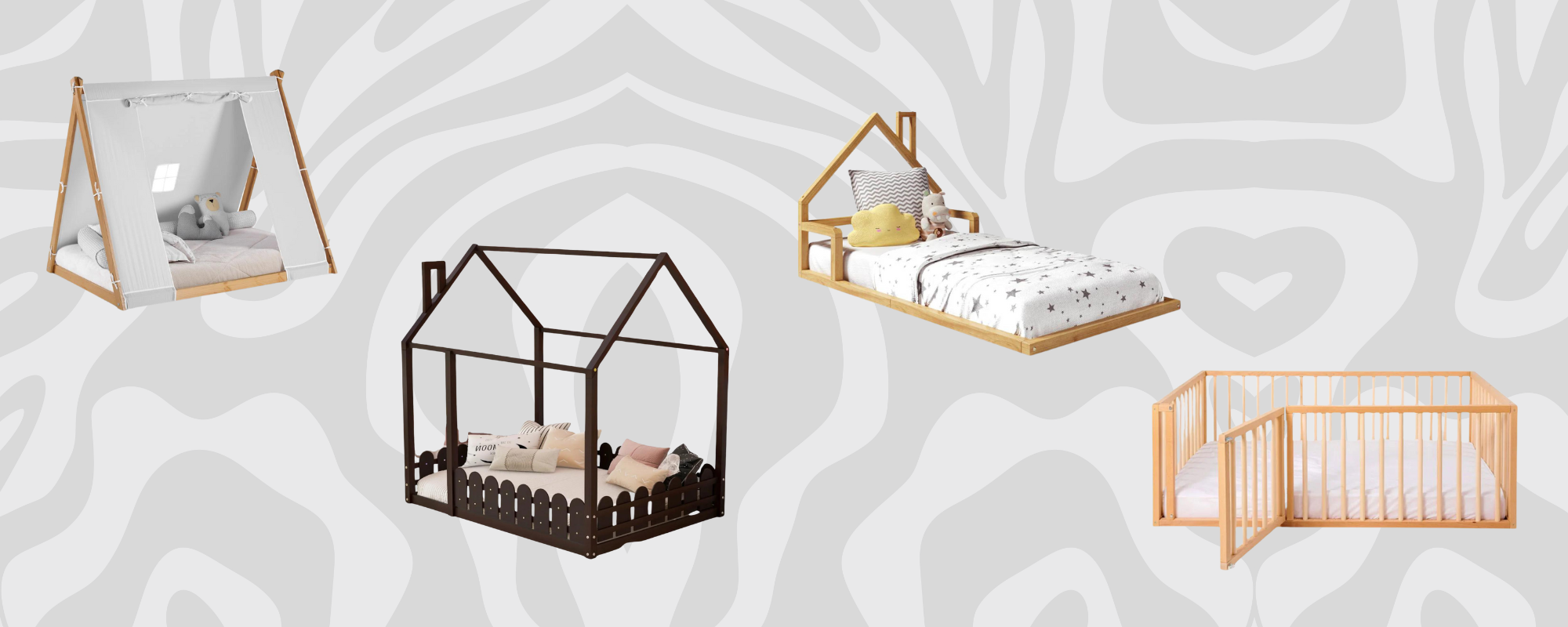
Montessori floor beds come in various styles, each offering unique aesthetics and functional benefits. Choose the option that best fits your family's needs, budget, and design preferences.

Casita Kids Montessori Inspired Wood Floor Twin Bed
Charming house-frame design with solid wood construction. Low profile promotes independence while the whimsical roof adds a playful touch to any bedroom.

Kid's House Twin Floor Bed - Grey with Natural
Premium house-frame bed with elevated roof design. Durable construction provides years of use as your child grows, with modern color options.

Curva Rattan Solid Wood Twin Floor Bed
Minimalist rattan design with modern curved aesthetic. Lightweight and easy to clean, perfect for creating a calm, Scandinavian-inspired sleep space.

Kid's Tent Twin Floor Bed - Grey with Natural Frame
Cozy tent-style frame creates a secure, cave-like sleep environment. Canvas cover is removable for easy cleaning and switching between seasonal styles.
Mattress-on-Floor Option
The simplest Montessori option is placing a mattress directly on the floor without any frame. This minimal approach emphasizes the child's connection to the sleeping surface and is the most budget-friendly option. Use a firm toddler mattress (typically 28" x 52" for standard cribs) and add a waterproof protector for easy cleanup.
Bedding and Comfort
Selecting appropriate bedding is essential for your child's comfort, safety, and the longevity of your floor bed investment. High-quality linens support better sleep while making maintenance manageable for busy parents.
Organic Fitted Sheets
Choose certified organic cotton sheets with deep pockets that fit your toddler mattress securely. Organic materials are gentler on sensitive skin and free from harmful chemicals.

Waterproof Protectors
A waterproof mattress protector is essential for protecting your investment from spills and accidents. Machine-washable options make cleanup quick and easy.

Breathable Blankets
Use lightweight, breathable blankets appropriate for your climate. Cotton or linen options prevent overheating while keeping your child comfortable throughout the night.

Age-Appropriate Pillows
Introduce pillows around age 3-4. Choose small, firm pillows specifically designed for toddlers to provide support without safety concerns.
Sleep Training Tips
Transitioning to a floor bed requires patience and consistency. Your child will test boundaries and explore their newfound independence. Here are evidence-based strategies to support a smooth transition.
Establish Consistent Routines
Children thrive on predictability. Establish a consistent bedtime routine starting 30-60 minutes before sleep. Include calming activities like reading, singing, or quiet play. Consistent timing helps regulate your child's internal sleep clock.
Use Visual Boundaries
Tape colorful tape on the floor around the bed to create a clear boundary. Many children understand and respect these visual limits, preventing them from wandering during sleep hours. Explain the boundary using simple language: "The tape shows where your bed is."
Create a Sleep-Promoting Environment
Keep the room cool (60-67 degrees Fahrenheit), dark, and quiet. Blackout curtains prevent early morning wake-ups while white noise machines mask household sounds. A calm environment communicates that sleep is a priority.
Practice Patience During Adjustment
The first 2-4 weeks may involve testing boundaries and extra nighttime wake-ups. Remain consistent with your approach. When your child gets out of bed, gently and calmly guide them back without engaging in conversation or play. Consistency is more important than perfect execution.
Developmental leaps, illnesses, or changes in routine may cause temporary sleep regression. This is normal and doesn't mean your approach is failing. Return to your established routine and give your child extra grace during challenging periods.
Frequently Asked Questions
Is a floor bed safe?
Yes, floor beds are safe when the room is properly childproofed. The low height actually reduces fall-related injuries. The key to safety is thorough environmental preparation, including securing furniture, removing hazards, and using safety gates as needed.
Will my child stay in bed all night?
Most children eventually do, but adjustment takes time. Initially, many toddlers explore their new freedom and may get out of bed repeatedly. Consistency with boundaries and maintaining a calming environment helps establish the expectation that bedtime is for sleeping.
Can I use a regular crib mattress?
Yes, standard crib mattresses (28" x 52") work perfectly with most floor bed frames. Ensure the mattress is firm and meets current safety standards. Consider the mattress height relative to your floor bed frame design for proper fit.
What about newborns?
Floor beds are not recommended for newborns who cannot move independently. Keep newborns in a safe sleep space like a bassinet. Once your child is developmentally ready (typically 18+ months), transition to a floor bed.
How do I monitor my child during sleep?
Baby monitors with video capability provide peace of mind. Door alarms or motion sensors can alert you if your child leaves the room. Many parents appreciate knowing their child is safe without constant intervention.
When should we transition back to a regular bed?
Many families keep floor beds through age 5-7 before transitioning to lofted or standard beds. Since floor beds already emphasize independence, the transition is often smooth. Follow your child's readiness cues and comfort level.
The Verdict
A Montessori floor bed is an excellent choice for families seeking to foster independence, trust, and a healthy sleep relationship with their toddler. When implemented thoughtfully with proper room safety measures and consistent routines, floor beds support both child development and parent peace of mind.
The transition requires patience and commitment, but the benefits extend far beyond better sleep. Your child learns to self-regulate, make choices, and develop confidence in their own body and decision-making. These foundational skills support lifelong independence and well-being.
Whether you choose a whimsical house frame, a cozy tent bed, or a simple mattress on the floor, the most important element is creating an environment that honors your child's growing autonomy while keeping them safe and loved.
Read more

Play Vehicles & Transportation Toys
Toy vehicles spark some of the most imaginative play in early childhood. From wooden trucks and trains to ride-on adventures in the backyard, transportation toys help children explore cause an...
Read more
What Shoe Size Does A Baby Or Toddler Wear? The Ultimate Guide
Finding the right shoe size for your baby or toddler is one of those tasks that sounds simple but quickly gets confusing. Sizes vary between brands, tiny feet grow fast, and your little one c...
Read more