

 Toddler
Best Outdoor Toys for Toddlers: Active Play Guide (2026)
 ·
April 28, 2026
·
April 28, 2026
The best outdoor toys for toddlers turn backyard time into developmental goldmines — building gross motor skills, sensory awareness, and social confidence that indoor play alone can't match. The World Health Organization recommends at least 180 minutes of physical activity a day for children aged 1 to 4, spread across the day, and the right toys make that time engaging, safe, and endlessly fun.
This guide covers the best outdoor toys organized by play type — active play, sensory and water play, and imaginative outdoor play — with safety tips and age recommendations for each.
You don't need a huge backyard. A water table, a balance bike, and a set of balls cover all three play types (sensory, gross motor, hand-eye coordination) and fit on an apartment balcony or small patio. Add a bubble machine for instant toddler magic.
Active Play & Gross Motor Toys
These toys get toddlers moving, climbing, balancing, and building the physical foundation for sports, playground skills, and everyday coordination. The World Health Organization's guidelines on physical activity for children under 5 emphasize that active play should be spread throughout the day and include a variety of movement types.
Climbing Structures
Indoor-outdoor climbing toys like Pikler triangles, dome climbers, and climbing arches build core strength, balance, and confidence. Start with low structures (under 2 feet) for 12-18 month olds and progress to taller climbers for 2+ year olds. Always place on grass or rubber mats — the CPSC playground surfacing guidance calls for a thick layer of shock-absorbing material extending at least 6 feet in all directions under play equipment.
Balance Bikes & Ride-Ons
Balance bikes are the best way to teach bike riding — they develop balance before adding pedaling complexity. Most toddlers can start a balance bike at 18 months. Ride-on toys without pedals suit even younger toddlers. See our bikes and tricycles guide.
Balance Boards
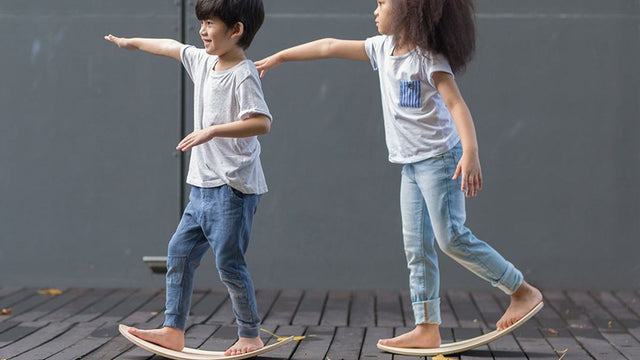
Wobble boards and balance boards challenge proprioception and core stability. Toddlers use them for rocking, standing balance games, and creative play (they become bridges, slides, and boats in imaginative scenarios).
Balls and Sports Equipment
Soft foam balls, oversized rubber balls, and toddler-sized basketball hoops develop throwing, catching, and kicking skills. T-ball sets introduce batting coordination around age 2-3.
Sensory & Water Play
Water Tables
Water tables are among the most-used outdoor toys for toddlers. They encourage scooping, pouring, splashing, and experimenting with water flow — all core sensory and fine motor activities. Most suit ages 18 months and up. Add accessories like funnels, cups, boats, and water wheels to extend play.
Sand & Mud Play
Sandboxes with covers (to keep out animals), sand and water sensory tables, and mud kitchens provide tactile sensory input that many toddlers crave. Sand play builds fine motor skills through scooping, pouring, and molding. Always supervise to prevent sand eating in younger toddlers.
Bubble Machines & Bubble Wands
Bubbles are universally loved and surprisingly developmental — chasing bubbles builds coordination, popping them develops hand-eye precision, and blowing them strengthens oral motor muscles used in speech development.
Imaginative Outdoor Play
Outdoor Play Kitchens & Mud Kitchens
Weather-resistant play kitchens or purpose-built mud kitchens let toddlers cook, mix, and serve in the fresh air. Adding real pots, wooden spoons, and nature items (leaves, flowers, sticks) turns the backyard into a restaurant, potion lab, or bakery. See our play kitchens guide.
Play Tents & Tunnels
Outdoor-rated pop-up tents and crawl tunnels create instant adventure zones. They encourage spatial reasoning (fitting through tunnels), imaginative play (camping, hiding), and physical activity (crawling, climbing in/out). See our play tents guide.
Garden Tools for Kids
Child-sized rakes, shovels, watering cans, and wheelbarrows let toddlers help in the garden. Gardening teaches patience, responsibility, and cause-and-effect while getting kids comfortable with dirt, bugs, and the natural world.
Outdoor Safety Checklist
- Sun protection — SPF 50+ sunscreen (reef-safe), UPF 50+ clothing, wide-brim hat, and UV-protective swimwear for water play. The American Academy of Dermatology recommends reapplying sunscreen every 2 hours during outdoor play
- Surface safety — grass, rubber mats, or wood chips under climbing equipment, not concrete or asphalt
- Fence check — ensure yard fencing has no gaps a toddler could squeeze through
- Water supervision — never leave toddlers unattended near any water, including water tables and kiddie pools
- Shade access — plan play during morning or late afternoon, and provide shaded areas during peak UV hours (10 AM-4 PM)
- Bug protection — use EPA-registered insect repellent safe for children over 2 months
Shop all outdoor toys at EasyTot →
Frequently Asked Questions
What are the best outdoor toys for 1-year-olds?
The best outdoor toys for 1-year-olds include push walkers, sandboxes with large scoops, water play tables, ride-on toys, bubbles, and balls. Choose sturdy, oversized toys without small parts, and always provide sun protection and direct supervision.
Are water tables good for toddlers?
Water tables are excellent for toddlers. They promote sensory exploration, fine motor development, cause-and-effect learning, and cooperative play. Most water tables suit ages 18 months and up. Add cups, funnels, and boats for extended engagement.
How do I choose safe outdoor toys?
Choose outdoor toys with UV-resistant materials, no sharp edges, no small detachable parts for children under 3, and weight limits that match your child's size. Look for toys labeled as meeting ASTM F963, and check CPSC.gov for recalls before purchase.
What outdoor toys help with gross motor development?
Climbing structures like Pikler triangles and dome climbers, balance bikes, tricycles, balance boards, slides, swings, and ball play all build gross motor skills. These activities develop coordination, balance, core strength, and spatial awareness.
When can toddlers play outside independently?
Toddlers should always have direct adult supervision during outdoor play. By age 3-4, children can play with slightly more freedom in a fully fenced, childproofed yard, but they still need an adult nearby monitoring for safety.
Keep reading
 GearLorena Canals Washable Rugs Review: Are $200-$600 Machine-Washable Rugs Worth It?
 GearBest Step Stools & Learning Towers for Toddlers (2026)
 GearBest Baby Blankets 2026
 GearBest Kids Headbands & Hair Accessories 2026
 GearBest Stroller Wagons 2026: WonderFold, Veer, Keenz & Evenflo Compared
 GearBest Kids Sweaters & Layers 2026
 GearBest Dolls & Pretend Play Toys 2026
 GearBest Washable Rugs for Kids & Nurseries 2026
 GearBest Nursery Rugs 2026: Washable, Non-Toxic and Natural Picks
 GearBest Christmas Decor & Holiday Stockings 2026
 GearBest Play Couches for Kids
 GearBest Balance & Wobble Boards for Kids (2026)
 GearMost Popular Kids Halloween Costumes 2026
 GearBest Ride-On Toys by Age
 GearBest Toddler Bike Helmets: Sizes, Fit & Safety Guide