 Buying guide
Best Sleep Sacks & Swaddles 2026
 ·
April 1, 2026
Last updated: October 2026
The best newborn sleep sack is a non-weighted, 1.0 TOG bamboo or cotton sack with a two-way zipper, sized by your baby’s weight rather than age. For the first weeks, a swaddle with arms-in keeps the startle reflex from waking your baby; the moment they try to roll, you switch to a sleep sack.
Below you’ll find the best baby sleep sacks by warmth (0.5 to 2.5 TOG), by fabric (muslin, bamboo, quilted cotton), by style and by budget, then the best newborn swaddles — every pick with its fabric, TOG rating, sizes and price read straight from the product listing. After the picks: how to match TOG to your nursery temperature, what to dress your baby in underneath, when to stop swaddling, and the safe-sleep rules that apply to all of it.
What parents actually buy: sleep sacks
Most “best sleep sacks” lists are affiliate picks. This one isn’t: the brands below are ordered by what parents actually buy, with the category leader set to 100. Dreamland Baby’s non-weighted bamboo sleep sack and swaddle lead the category, with Tealbee’s Dreamsuit a clear second.
| Rank | Brand | Popularity index |
|---|---|---|
| #1 | Dreamland Baby |
100
|
| #2 | Tealbee |
47
|
| #3 | Nyte Nyte Baby |
6
|
| #4 | Angel Dear |
6
|
| #5 | LollyBanks |
6
|
| #6 | Little Unicorn |
5
|
Relative popularity of sleep-sack and swaddle brands at EasyTot over the last 30 days. The bar shows each brand relative to the category leader (leader = 100). Updated October 2026.
Buy one 1.0 TOG sack first — it covers a 68–73°F nursery, which is where most homes sit. Add a 0.5 TOG for summer or a 1.5–2.5 TOG for a cold room only once you know how your nursery runs. Pick a two-way zipper (bottom-up diaper changes at 3 a.m.), skip anything weighted, and size by your baby’s weight and length, not their age.
Best newborn sleep sacks overall
The best newborn sleep sack overall is the Angel Dear Bamboo Sleep Bag ($52): 1.0 TOG viscose from bamboo for a 69–73°F room, a two-way zipper, tag-free seams and no weighted beads, in 0/6M, 6/18M and 18/36M sizes. The Tealbee Dreamsuit is the other strong pick, a sleep sack with legs for babies who are starting to stand, in 0.8, 1.2 and 1.5 TOG.

What makes a sleep sack a great everyday pick is boring in the best way: a two-way zipper so you can change a diaper from the bottom without waking your baby, a fabric that breathes (bamboo viscose or cotton muslin), a TOG rating you can match to your thermostat, and a size chart in pounds and inches. Every pick on this page has at least three of those four; the ones below have all four.
If you want one sack that works most of the year, choose 1.0 TOG. If your baby is already cruising the crib rail, the Tealbee Dreamsuit and the Nyte Nyte Baby separate-leg sacks let them stand and crawl without tripping on a hem. And if the price of the top picks stings, the Mushie Organic Cotton Sleep Bag ($32) and the LollyBanks sacks under $25 further down do the same job in organic cotton.
Sleep sack comparison: fabric, TOG, sizes, price
Every spec below is read from the product listing. Where a brand does not state a TOG rating or a fiber content, the cell says so — check the product page rather than guessing. Prices are the current price of the product shown.
| Sleep sack | Fabric | TOG | Sizes | Price | Best for | |
|---|---|---|---|---|---|---|
 |
Angel Dear Bamboo Sleep Bag (Cabbage Rose Stripe) | Viscose from bamboo | 1.0 (69–73°F) | 0/6M–18/36M | $52 | Two-way zipper, tag-free; no weighted beads |
 |
Tealbee Dreamsuit | 70% bamboo rayon, 30% organic cotton | 0.8 / 1.2 (64–72°F) / 1.5 | 12m–2T, 2T–3T, 3T–4T (by height) | $38–40 | Walkers and toddlers — a sack with legs |
 |
Nyte Nyte Baby sleep sack | 95% bamboo, 5% spandex | 0.5 / 1.0 / 2.5 | 0–6 m to 3–4T | $39–71 | Separate-leg design in every warmth level |
 |
Angel Dear Sleep Bag | Viscose from bamboo | 1.0 (69–73°F) | 0/6M, 6/18M, 18/36M | $52 | Hand-drawn prints, tag-free, two-way zipper |
 |
LollyBanks Sleep Sack | 100% organic cotton | 0.5 | S 0–6 m to XL 18–24 m | $17–21 | Budget pick; same two-way zipper |
 |
Little Unicorn Cotton Muslin Sleep Bag | Cotton muslin | Not stated (lightweight) | S 10–18 lb to XL 27–30 lb | $50 ($60 quilted) | Hand-painted prints; sized in pounds and inches |
 |
Sweet Bamboo 1.5 TOG Sleep Sack | Quilted (fiber not stated — see product page) | 1.5 | 0–9 m (30"), 9–18 m (34"), 18–24 m (38") | $54 | Winter warmth with a J-zipper |
 |
forever french baby Bamboo Sleep Sack | 95% viscose bamboo, 5% spandex (1.0 has polyester fill) | 0.5 or 1.0 | 0–6 m, 6–18 m, 18–36 m | $55–60 | Checkerboard prints with a pick of two TOGs |
 |
Nellapima Milano Baby Quilted Sack | 100% Pima cotton, quilted | Not stated | 0–3M, 3–6M, 6–12M | $57 | True newborn sizing with short sleeves |
 |
Mebie Baby Sleep Sack | 95% bamboo, 5% spandex; polyester fill | 1.0 | 0–6, 6–12, 12–24 (lengths listed) | $55 | Floral and cowboy prints, roomy cut |
 |
SwaddleDesigns Muslin zzZipMe Sack | 100% cotton muslin, double gauze | Not stated (lightweight) | 0–6 m (to 28"), 6–12 m (to 32"), 12–18 m (to 36") | $18–20 | Two-pull zipper; cheapest muslin sack |
 |
Bamboo Little Sleep Sack | 95% viscose bamboo, 5% spandex; polyester fill | 1.0 | 0–12M (one size) | $30–50 | Year-round 1.0 TOG with room to grow |
Lightweight sleep sacks for warm weather (0.5–1.0 TOG)
For a nursery that runs warm, choose a 0.5 TOG sleep sack: sleeveless, single-layer bamboo or cotton muslin, no filling. The brands that print a temperature on the tag put 0.5 TOG at roughly 74–78°F, and 1.0 TOG at 68–73°F; in between, a 1.0 TOG sack over a diaper alone is the usual summer answer.

The Nyte Nyte Baby 0.5 TOG ($49.95) is 95% bamboo, sleeveless and cut with separate legs, in sizes from 0–6 months up to 5T. The Little Unicorn Cotton Muslin Sleep Bag ($49.99) is the classic double-gauze option with a size chart in pounds (Small fits 10–18 lb). The SwaddleDesigns Muslin zzZipMe Sack ($20) gets you the same breathable muslin for less than half the price, with a two-pull zipper that opens from the top for placing a sleeping baby and from the foot for diaper changes.
In a warm room, less is more underneath: a diaper and a short-sleeve bodysuit is plenty under 0.5 TOG. Check the back of your baby’s neck or their chest, not their hands or feet, to judge whether they are comfortable. Lightweight sleep sacks also make the best travel sacks, because they pack flat and dry overnight after a wash.
Quilted & warm sleep sacks (1.5–2.5 TOG)
For a nursery that drops into the low 60s°F, a quilted sleep sack rated 1.5 TOG or higher replaces the blanket you are not allowed to use. Tealbee rates its 1.5 TOG for a 61–69°F room; for anything colder, the Nyte Nyte 2.5 TOG is the warmest sack at EasyTot. Quilted sacks carry a layer of padding (polyester fill or an extra layer of muslin) stitched so it cannot bunch into cold spots.

The Little Unicorn Cotton Muslin Quilted Sleep Bag ($59.99) layers quilted muslin for cooler months and keeps the two-way zipper; sizes run from Small (10–18 lb) to X-Large (27–30 lb). The Sweet Bamboo 1.5 TOG Sleep Sack ($54) is the puffy one, with a quilted lining and a two-way J-zipper, in three sizes by length (30, 34 and 38 inches). For a newborn, the Nellapima Milano Quilted Sack ($57) is 100% Pima cotton with short sleeves and starts at 0–3 months. The Abby & Evie quilted bamboo sacks ($32–38) are the value pick for a cold room.
Under a 1.5 TOG sack, a long-sleeve bodysuit or light footed pajama is usually right; under 2.5 TOG, do not add more than a footed pajama. The AAP’s rule of thumb is one layer more than you would wear yourself in the same room, and the warning signs of too much are sweating, a hot chest or flushed skin.
Bamboo sleep sacks
Bamboo viscose has become one of the most popular fabrics for baby sleepwear, and for good reason. It’s exceptionally soft — often compared to cashmere or silk — stretchy, and good at regulating temperature. Bamboo viscose wicks moisture away from the skin and lets air circulate, which is why most bamboo sacks are rated 0.5 or 1.0 TOG. Read the fiber line on the listing: “bamboo” sacks at EasyTot are typically 95% viscose from bamboo and 5% spandex, and the 1.0 TOG versions add a polyester fill.

Parents of babies with eczema or sensitive skin often find bamboo sleep sacks to be a game-changer. The smooth fibers are gentle against irritated skin. Wash bamboo sacks inside out on a cold, gentle cycle and tumble dry low; several brands note a few percent of shrinkage on the first wash, so size up if your baby is at the top of a range. For the full case for and against the fabric, read bamboo baby pajamas: the good and the bad.
The forever french baby Bamboo Sleep Sack ($55–60) lets you choose 0.5 or 1.0 TOG in the same print, in 0–6, 6–18 and 18–36 month sizes. Rayn’s Tiny Stitches makes the boldest bamboo prints (beetles, space dinos, a Chicago skyline) at $76–83. One honest note: several bamboo brands also sell weighted versions, and the American Academy of Pediatrics says not to use weighted blankets, sleepers or swaddles on or near your baby — so for a newborn, stick to clearly labeled non-weighted options.
Print & pattern sleep sacks
A fun print can make the bedtime routine feel more special, and it has a practical side: when each child has a distinctly patterned sleep sack, grandparents, babysitters and daycare staff grab the right one. Many parents also designate prints by warmth — florals for the 0.5 TOG, cozy animals for the quilted one — so nobody has to read a tag at 2 a.m.

The Angel Dear Sleep Bags ($52) carry the brand’s hand-drawn florals, farm tractors and castles on 1.0 TOG bamboo with a tag-free neck. Mebie Baby ($55) does muted florals and a cowboy print on 95% bamboo with a roomy cut (lengths are listed by size on the page). Little Unicorn is the hand-painted one — airplanes, dinosaurs, a farmyard — on cotton muslin. For watercolor roses on muslin at $20, the SwaddleDesigns zzZipMe prints are hard to beat.
Solid & neutral sleep sacks
For parents who prefer a clean, understated nursery, solid-colored sleep sacks coordinate with any crib sheet, photograph well, and pass down to a sibling of either sex. Versatile shades like sage, stone blue, blush and cream are also the safe choice for a registry or a gift.

The Angel Dear solid sleep bags ($52) come in milky green, stone blue, blue fog and lilac on the same 1.0 TOG bamboo as the prints, with a ribbed option for texture. Rayn’s Tiny Stitches Solid Sleep Sack adds a double zipper. For a newborn-only heirloom piece, the SwaddleAn cable-knit sacks ($40) are 100% long-staple cotton knit in sage, navy and black, sized 0–6 months. Don’t mistake simplicity for lack of quality — these use the same fabrics, two-way zippers and tag-free construction as the patterned sacks.
Budget-friendly sleep sacks under $25
Babies grow quickly and need two or three sleep sacks on rotation (one to wear, one in the wash, one spare), so a sack under $25 that does not cut corners is a smart buy. Every sleep sack below is under $25, and each one is 100% organic cotton with a two-way zipper and a 0.5 TOG rating — the same construction you pay twice as much for elsewhere.

The LollyBanks sleep sacks ($16.99–21) are 100% organic cotton, 0.5 TOG, with a two-way zipper that opens from the bottom for diaper changes, in farm, flamingo, wildflower and bow prints. LollyBanks also makes matching swaddle sacks ($19) in S/M (0–3 months) and L (3–6 months) with hook-and-loop wings, so you can keep one print from the swaddle stage into the sleep-sack stage. The SwaddleDesigns zzZipMe muslin sack ($18–20) is the other under-$25 option, in cotton muslin rather than jersey.
When shopping on a budget, prioritize fit, fabric quality, and a zipper that won’t snag. Avoid sleep sacks with decorative elements like buttons or ties that could pose a choking hazard.
Best newborn swaddles: wraps, pods and swaddle sacks
The best newborn swaddle is one you can do one-handed at 3 a.m.: a zip-up pod or a sack with hook-and-loop wings, not a blanket you have to fold. Newborns have a strong startle (Moro) reflex that can wake them repeatedly; a swaddle keeps the arms snug so a flung arm does not end the nap. The AAP’s position is that swaddling is fine if you like it, that it does not reduce the risk of SIDS, and that it stops the moment your baby looks like they are trying to roll.

The Norani Baby Snugababe Swaddle Sleep Pod ($33–36) is the easiest for a first-time parent — arm inserts, secure fasteners and a zipper, sized S/M for 7–14 lb and L for 14 lb and up. The embé Starter Swaddle ($44.99) is 100% cotton jersey at 0.5 TOG with a patented legs-in/legs-out pouch and three snap lengths; the long-sleeve version ($35.99–44.99) adds fold-over mittens for scratchy newborns.
The Ollie Swaddle ($69.79) is the stretchy, hook-and-loop one that lets you leave one or both arms out, and the SwaddleDesigns Omni Swaddle Sack ($27.99) gives you four arm positions — arms down, one hand up, arms up with cuffs closed, or arms fully out through the sleeves — in one garment sized 6–14 lb or 12–18 lb. For the full comparison of the two approaches, read swaddle vs. sleep sack: when to use each.
| Swaddle | Fabric / TOG | Sizes | Price | Arm options | |
|---|---|---|---|---|---|
 |
Norani Baby Snugababe Swaddle Sleep Pod | Not stated — see product page | S/M 7–14 lb, L 14+ lb | $33–36 | Arm inserts; zip-off for diaper changes |
 |
embé Starter Swaddle | 100% cotton jersey, 0.5 TOG | Newborn; 3 snap lengths, legs in or out | $44.99 | Arms in (long-sleeve version: in or out) |
 |
The Ollie Swaddle | Stretch fabric (fiber not stated) | One size | $69.79 | One or both arms out |
 |
SwaddleDesigns Omni Swaddle Sack | Not stated — see product page | Small 6–14 lb, 3M 12–18 lb | $27.99 | Arms down, one up, arms up, or out |
 |
LollyBanks Swaddle Sack | 100% organic cotton, 0.5 TOG | S/M 0–3 m, L 3–6 m | $17–19 | Hook-and-loop wings; bottom zipper |
 |
The Alphie Sleep Pouch | Moisture-wicking stretch (fiber not stated) | Owl, Fox, Raccoon | $59 | Arms free — the post-swaddle pouch |
Sleep sack TOG ratings by room temperature
TOG (Thermal Overall Grade) measures how much warmth a fabric holds in: the higher the number, the warmer the sleep sack. For most nurseries, 1.0 TOG is the right sleep sack — the brands that print a range rate it for 68–73°F. Go to 0.5 TOG above about 74°F and to 1.5 TOG or more below about 69°F, and adjust what your baby wears underneath before you buy a second sack.
The ranges below are the ones the brands themselves print on their listings. Where a brand only says “summer” or “winter” without a temperature, the row says so.
| TOG | Room temperature (per the listings) | Under the sack | Example |
|---|---|---|---|
| 0.5 | About 74–78°F (SwaddleAn, House of Henry); “summer / warmer weather” (Nyte Nyte, LollyBanks) | Diaper only, or a short-sleeve bodysuit | Nyte Nyte 0.5 TOG, LollyBanks |
| 0.8 | “Spring, summer and warmer environments” (Tealbee) | Short- or long-sleeve bodysuit | Tealbee Dreamsuit 0.8 |
| 1.0 | 68–73°F (Angel Dear, Coco Moon) | Long-sleeve bodysuit or light pajama | Angel Dear |
| 1.2 | 64–72°F (Tealbee) | Long-sleeve pajama | Tealbee Dreamsuit 1.2 |
| 1.5 | 61–69°F (Tealbee); “fall and winter” | Footed pajama | Sweet Bamboo 1.5, Tealbee 1.5 |
| 2.5 | Not stated on the listing — the coldest rooms; see product page | Footed pajama; nothing heavier | Nyte Nyte 2.5 TOG |
Two things the table cannot tell you. First, a thermostat reading in the hallway is not the nursery temperature at 4 a.m. — a $10 room thermometer on the dresser settles the question. Second, a sleep sack with a polyester fill (most 1.0 and 1.5 TOG bamboo sacks) holds more heat than its TOG number suggests on a baby who runs warm; if the back of the neck is damp, drop a layer underneath before you drop a TOG.
What should a baby wear under a sleep sack?
A baby should wear one layer more than you would be comfortable in yourself in the same room — that is the AAP’s rule — and the sleep sack counts as a layer. In practice: a diaper or short-sleeve bodysuit under 0.5 TOG, a long-sleeve bodysuit under 1.0 TOG, and a footed pajama under 1.5–2.5 TOG. Overheating raises the risk of SIDS, so when in doubt, dress lighter.

Check your baby, not the thermometer: sweating, a hot chest or flushed skin mean too many layers; cool hands and feet are normal and do not mean too few. Skip the hat indoors once you are home from the hospital. If you are choosing the pajamas to go underneath, best baby sleepwear covers footed versus two-piece and the snug-fit rule for pajamas.
When to stop swaddling and move to a sleep sack
Stop swaddling as soon as your baby looks like they are trying to roll over. The AAP notes that rolling usually happens around 3 to 4 months but can happen earlier, and that the risk of suffocation is higher if a swaddled baby rolls onto their stomach. The move is a three-step one, and the gear above is built for it.

- Newborn (arms in). A zip or hook-and-loop swaddle — Norani’s pod, embé’s Starter, LollyBanks’ swaddle sack — keeps both arms snug. Make sure the swaddle is not so tight that it is hard for your baby to breathe or move their hips, and always place them on their back.
- One arm out, then both. The Ollie Swaddle and the SwaddleDesigns Omni both convert: free one arm for a few nights, then the other. Expect a rougher night or two; the startle reflex fades on its own over the same weeks.
- Sleep sack. Once both arms are out, a sleeveless sleep sack is the same warmth without any restriction. Many parents jump straight from step 1 to a sleep sack at the first sign of rolling — that is fine, and it is what the AAP guidance points to.
If your baby is in the newborn sleep fog and nothing seems to work, newborn sleep in the first three months explains what is normal, and setting up the nursery for better sleep covers temperature, light and noise.
Muslin vs bamboo vs quilted cotton: which sleep sack fabric?
Cotton muslin is the coolest sleep sack fabric, bamboo viscose is the softest and stretchiest, and quilted cotton is the warmest — and that is the whole decision. Muslin (Little Unicorn, SwaddleDesigns, Mushie) is an open double-gauze weave that softens with every wash and dries fast; it is the fabric for a warm room and for a baby who sweats. Bamboo viscose (Angel Dear, Mebie, forever french, Bamboo Little) is 95% viscose with 5% spandex, so it stretches over a wriggler and feels silky; the 1.0 TOG versions add a thin polyester fill. Quilted cotton (Nellapima’s Pima, Little Unicorn’s quilted muslin, Sweet Bamboo’s 1.5 TOG) traps air between stitched layers for a cold nursery. Organic cotton jersey (LollyBanks, embé) sits between muslin and bamboo — a little heavier than muslin, less stretchy than bamboo, and the cheapest of the four.
Sleep sack sizing: go by weight and length, not age
Size a sleep sack by your baby’s weight and length, because “0–6 months” means different things at different brands: Little Unicorn’s Small fits 10–18 lb and 23–26 inches, Norani’s S/M swaddle pod fits 7–14 lb, embé’s newborn swaddle fits 6–14 lb, and Tealbee sizes the Dreamsuit by height from 12 months up. A sack that is too big can ride up over the face; too small restricts the legs, which should be free to bend and move.
- Newborn (under 10 lb): look for a true newborn size — Nellapima 0–3M, Norani S/M (7–14 lb), embé Starter (6–14 lb), LollyBanks swaddle sack S/M (0–3 months).
- 10–18 lb: Little Unicorn Small, Angel Dear 0/6M, SwaddleDesigns 0–6 months (fits to 28 inches), Mebie 0–6 (27.25 inches long).
- Standing and walking: a sack with legs (Tealbee Dreamsuit from 12m–2T, Nyte Nyte from 0–6 months up to 3–4T) so they can cruise the crib without a hem under their feet.
Bamboo sacks shrink a little on the first wash — Tealbee says to expect it — so if your baby is at the top of a range, buy the next size.
Safe sleep rules for sleep sacks and swaddles
A sleep sack or swaddle is only as safe as the sleep setup around it. These are the points from the AAP’s parent guide to safe sleep that apply to sleepwear; for the full picture, read our safe sleep for babies guide.
- Back to sleep, every sleep, on a firm, flat surface — a swaddled baby especially.
- No loose bedding, pillows, bumpers or stuffed toys in the crib. A wearable blanket replaces the blanket.
- Nothing weighted — no weighted blankets, sleepers, swaddles or weighted objects on or near your baby.
- Do not overheat. One layer more than you are wearing; watch for sweating, a hot chest or flushed skin; no hat indoors.
- Swaddle snug, not tight. Your baby should be able to breathe easily and move their hips. Stop swaddling at the first sign of trying to roll.
- Skip buttons, ties and loose decoration on anything your baby sleeps in.
Shop all sleep sacks at EasyTot →
Frequently Asked Questions
What is the best sleep sack for a newborn?
For a newborn, the best sleep sack is a non-weighted 1.0 TOG sack in a true newborn size, such as the Nellapima Milano Quilted Sack (0–3M). Most newborns start in a swaddle instead and move to a sleep sack at the first sign of rolling.
When should I stop swaddling my baby?
Stop swaddling as soon as your baby looks like they are trying to roll over. The AAP says rolling usually happens around 3 to 4 months but can happen earlier. Move to a sleep sack, which keeps baby warm with arms free.
What TOG rating do I need for a sleep sack?
Use 1.0 TOG for a nursery around 68–73°F, 0.5 TOG above about 74°F, and 1.5 TOG or more below about 69°F — those are the ranges the brands print on their listings. TOG measures how much warmth the fabric holds in; higher means warmer.
Are sleep sacks safer than blankets?
Yes. The AAP’s safe-sleep guidance says to keep loose bedding out of the crib because it raises the risk of suffocation and entrapment, and to use layers of clothing or a wearable blanket instead if you are worried about your baby getting cold.
Are muslin swaddles safe for sleep?
Yes, with the same rules as any swaddle: baby on their back, the wrap snug but loose enough to breathe and move the hips, nothing weighted, and stop at the first sign of rolling. Cotton muslin is an open, breathable weave, which makes it a good choice for a warm room. Swaddling does not reduce the risk of SIDS.
Are cheaper baby swaddles safe?
Price is not a safety signal. What matters is that the swaddle is non-weighted, fits snugly without restricting breathing or hip movement, has no loose ties or buttons, and is used on a baby who is on their back and not yet rolling. A $19 organic cotton LollyBanks swaddle sack meets all of that.
How many sleep sacks do I need?
Have at least 2–3 sleep sacks in your baby's current size: one in use, one in the wash, and a spare. If your climate has big temperature swings, keep both a lightweight (0.5–1.0 TOG) and a warmer (1.5–2.5 TOG) option on hand.
What should my baby wear under a sleep sack?
One layer more than you would wear in the same room, counting the sack: a diaper or short-sleeve bodysuit under 0.5 TOG, a long-sleeve bodysuit under 1.0 TOG, and a footed pajama under 1.5–2.5 TOG. Check your baby's chest or the back of the neck, not hands or feet, and dress lighter if they feel hot or sweaty.
Can a newborn sleep in a sleep sack instead of a swaddle?
Yes. The AAP says swaddling is optional and does not reduce the risk of SIDS, so a newborn can go straight into a sleeveless sleep sack. Choose a true newborn size so the neck and armholes fit, and expect a few nights of startle-reflex wake-ups that fade over the first weeks.
Keep reading
 SleepBaby Won't Sleep? A Troubleshooting Guide (2026)
 SleepCo-Sleeping & Room Sharing: What the Research Says (2026)
 SleepBaby Nap Transitions: When & How to Drop a Nap (2026)
 SleepNursery Setup for Better Baby Sleep (2026 Guide)
 SleepSwaddle vs. Sleep Sack: When to Use Each (2026 Guide)
 SleepHow Much Sleep Does Your Baby Need? Guide by Age (2026)
 SleepNewborn Sleep: What to Expect in the First 3 Months (2026)
 SleepHow to Build the Perfect Baby Bedtime Routine (2026)
 SleepBaby Sleep Regressions: Ages, Causes & Solutions (2026)
 SleepBaby Sleep Training Methods: Evidence & How to Choose (2026)
 SleepSafe Sleep for Babies: Evidence-Based Guide (2026)
 SleepSafest Bassinets for Baby 2026
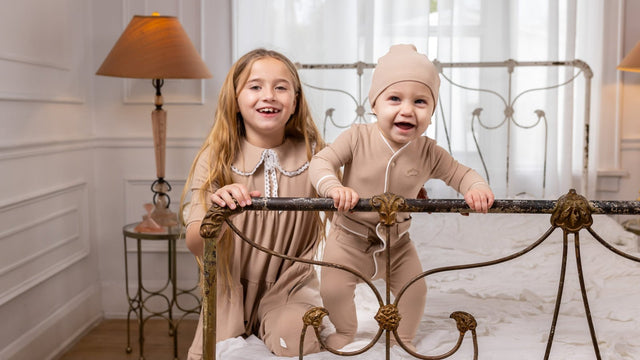 GearBest Baby Pajamas for Sweet Dreams 2026
 GearZumbamboo Review: Bamboo Pajamas, Custom-Name Blankets & Matching Sets