

 Baby feeding guide
Nursing Gear Essentials: Pillows, Bras & More (2026)
 ·
April 26, 2026
·
April 26, 2026
Last updated: October 2026
Breastfeeding itself doesn't require any equipment, just you and your baby. But the right nursing gear transforms the experience from physically grueling to genuinely comfortable, especially during the marathon newborn feeding sessions when you are nursing around the clock. The difference between a good nursing pillow and no pillow, between a supportive nursing bra and a regular bra you are constantly wrestling with, is the difference between dreading each feed and settling in comfortably.
Here is what is actually worth buying, what is optional, and what you can skip entirely, with the specific features that separate a pillow, bra or cover that helps from one that ends up in the closet.
Nursing Pillows: Your Most Important Purchase
Four shapes, four prices. The "what it is" column repeats each maker's own description; the last column is our read on who each one suits.
| Pillow | Price | What it is | Who it suits | |
|---|---|---|---|---|
 |
Travel Cradle Arm Pillow Little Mae & Co |
$29.99 | Arm pillow: wraps your forearm and lifts baby's head to the breast | Nursing on the go, or a lighter option than a full wrap-around pillow |
 |
Customizable Nursing Pillow - Moonlight White Moonjax |
$46.00 | Crescent, one-size wrap-around; the maker lists nursing, bottle-feeding, sitting and tummy-time uses | The classic full-support shape for the couch or nursing chair |
 |
Beige Yin Yang Support Pillow Toki Kids |
$71.25 | Organic latex foam support pillow; the maker lists side sleeping, nursing, tummy time and sitting up | A single pillow that starts in pregnancy and keeps working after |
 |
Orion Comfy Cradle Goosewaddle |
$25.00 | Nursing arm pillow that supports baby's head and neck; fits most arms | The lowest-cost way to try an arm-style pillow |
Without a nursing pillow, you hunch forward to bring your breast to the baby, hold the baby's weight with your arms, and develop neck, shoulder and back pain that gets worse with every feeding. A proper nursing pillow wraps around your waist, brings the baby to breast height, and supports their weight so you can focus on positioning and latch rather than fighting gravity. That matters most in the first weeks, when a good latch is the thing that prevents sore nipples, and a good latch is far easier when the baby is already at the right height.
Which shape for which feeding position: a wrap-around crescent is the classic for the cradle and cross-cradle holds on a couch or nursing chair; a firm, flatter support pillow suits the football hold (baby tucked under your arm, useful after a cesarean because nothing rests on the incision) and doubles as a pregnancy and tummy-time pillow; an arm pillow is the one for feeding on the go or in bed, where a full wrap-around is too bulky. Many families end up with one of the first two for home and an arm pillow for the diaper bag.
What to look for: a pillow firm enough to actually hold the baby at the right height (too soft and the baby sinks, ruining latch positioning), a removable and washable cover (milk will get on it constantly), and an adjustable closure to fit different body sizes. Press your hand into the pillow in the store or read the fill description online: a pillow that compresses by half under your palm will compress by half under a baby. You will use a nursing pillow for every feeding session for months, which makes it one of the highest-use items you will own.

Nursing Bras: What Actually Matters
A good nursing bra has easy one-handed clasp or clip access (your other hand is holding the baby), provides gentle support without underwires, and fits your postpartum body comfortably. The usual advice is to skip underwires in the early weeks while your supply is establishing, because a wire pressing on breast tissue can contribute to clogged ducts; a wide, soft band does the supporting instead.
Your breast size changes a lot in the first weeks as your milk comes in and settles, so most lactation consultants suggest waiting until things stabilize before investing in fitted nursing bras, and buying a few stretchy, wireless styles for the immediate postpartum period. Sleep bras with a crossover front are the first-week workhorse. Nursing sports bras are the daytime favorite for their combination of support, comfort and all-day wearability, and the high-impact versions are the ones to walk and exercise in once your provider clears you. For a deep dive on bra types, sizing and our favorite picks, see our complete nursing bras guide.

Nursing Gear Checklist
| Item | Priority | When You Need It | Notes |
|---|---|---|---|
| Nursing Pillow | Essential | Day 1 | Firm support; get 2–3 washable covers |
| Nursing Bras (2–3) | Essential | Immediately (stretchy); fitted at 2–4 weeks | Wireless, one-handed clips; avoid underwire early on |
| Hands-Free Pumping Bra | Essential if pumping | Before returning to work or starting regular pumping | Holds flanges in place; some nursing bras have built-in compatibility |
| Nursing Tops (3–4) | Very helpful | First week | Hidden panels for discreet access; machine-washable |
| Nursing Cover | Optional | When you want privacy | Personal preference; not legally required anywhere in the U.S. |
| Nursing Pads | Depends | When your milk comes in, a few days after birth | Start with a small pack; not everyone leaks significantly |
| Nipple Cream | Depends | If you experience soreness | Lanolin or coconut oil; expressed breast milk works too |
Hands-Free Pumping Bras
If you will be pumping regularly, whether exclusively, at work, or to build a stash, a hands-free pumping bra is non-negotiable. These bras hold pump flanges in place so you do not have to sit still holding two bottles for the whole session. Some nursing bras now include built-in pumping compatibility (a second layer or an opening that holds the flange), so you do not need a separate bra for pumping and for nursing; a true two-in-one is the better buy if you will do both daily.
The time savings are significant: you can work, eat, hold the baby or scroll your phone while pumping, which makes the whole experience far less tedious, and a well-fitted pumping bra also keeps the flange centered on the nipple, which is where comfort and output come from. For pumping schedules, flange sizing and equipment, see our breastfeeding and pumping guide, and if you are heading back to an office, our pumping at work guide.

Nursing Covers: Useful but Entirely Personal
Whether you want a nursing cover depends entirely on your comfort level. Some moms are perfectly comfortable nursing openly anywhere; others prefer coverage at family gatherings, in public, or at work. A lightweight, breathable cover that allows airflow and lets you see your baby is the most practical option; a stiff cover with a rigid neckline is hotter and harder to latch under.
Multi-use covers that double as car seat covers, scarves or stroller blankets are popular because they serve several purposes. That said, you are legally protected to breastfeed in public: every state has a law specifically allowing it, and the National Conference of State Legislatures keeps the list. A cover is a personal preference, not a requirement.

Nursing-Friendly Clothing
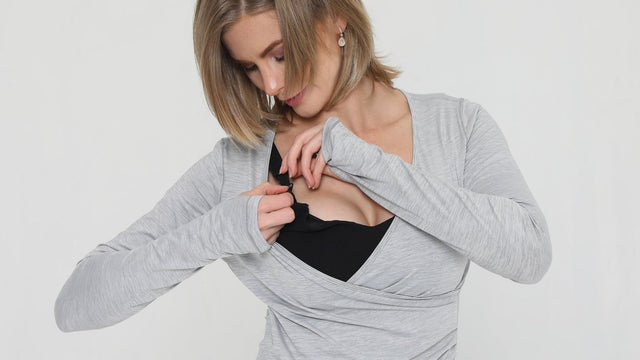
In the early weeks you will nurse so frequently that easy breast access becomes a genuine quality-of-life factor. Dedicated nursing tops, hoodies and dresses feature hidden panels, zippers or clips that let you nurse without pulling up your entire shirt, which matters in winter, in public, or anytime you would rather not expose your postpartum belly.
Nursing hoodies are a particular favorite for combining warmth, comfort and discreet access; a side zipper or a lift-up front panel is faster one-handed than a crossover. Look for fabrics that are soft against sensitive postpartum skin, machine-washable, and stretchy enough to accommodate a changing body. Most moms find that 3–4 good nursing tops get them through the early months comfortably, and a two-piece lounge set with a lift-up top does the same job at home.

What You Can Skip
Breast shells for sore nipples: a niche purchase that most women will not need. If you have persistent nipple pain, an IBCLC visit to fix the latch is more effective than any product.
Specialty nursing nightgowns: an oversized button-down shirt works just as well for nighttime feeds and costs nothing.
A second full-size pillow for travel: an arm pillow or a rolled towel covers the occasional feed away from home; save the money for a spare cover instead.
Pack the essentials in your hospital bag so you are ready for those first nursing sessions right after delivery.
If you do buy a pillow, a spare washable cover is the one accessory worth adding. Milk and spit-up land on it daily, and a second cover means the pillow is never out of action on wash day. Covers are sized to the pillow shape, so buy the one made for your pillow or check the dimensions against it.

Frequently Asked Questions
What nursing gear do I actually need?
The essentials are a firm nursing pillow with washable covers and 2–3 comfortable nursing bras with one-handed access. If you plan to pump, add a hands-free pumping bra. Everything else, covers, pads, cream and clothing, is helpful but optional depending on your situation and preferences.
When should I buy nursing bras?
Buy 2–3 stretchy, wireless bras before your baby arrives for the immediate postpartum period. Wait until your milk supply and breast size have settled, a few weeks after birth, before investing in fitted nursing bras, and avoid underwire during the early weeks.
Is a nursing pillow worth it?
A nursing pillow is widely considered the single most useful breastfeeding purchase. It prevents hunching, supports your baby's weight so your arms do not fatigue, and helps maintain proper latch positioning. Given that you will use it for every feed for months, a pillow in the $25 to $75 range pays for itself many times over in comfort.
Which nursing pillow shape is best?
A wrap-around crescent suits cradle and cross-cradle holds on the couch; a firm, flatter support pillow suits the football hold and is easier after a cesarean because nothing rests on the incision; an arm pillow is best for feeding on the go or in bed. Firmness matters more than shape: a pillow that compresses by half under your palm will not hold the baby at breast height.
Do I need a separate pumping bra?
If you pump regularly (returning to work, exclusive pumping, daily stash-building), a hands-free pumping bra is essential because it holds the flanges in place so your hands are free. Some nursing bras have built-in pumping compatibility, which removes the need for a separate bra. For occasional pumping, a regular nursing bra works fine.
Are nursing covers necessary?
Nursing covers are a personal preference, not a necessity. Every state has a law that specifically allows breastfeeding in public. If you prefer coverage, choose a lightweight, breathable cover that allows airflow and eye contact with your baby; multi-use covers that double as car seat covers or scarves offer the most versatility.
Keep reading
 FeedingBreastfeeding Problems: Common Issues and Evidence-Based Solutions (2026)
 FeedingCombination Feeding Guide: How to Mix Breastfeeding and Formula With Confidence
 FeedingPacifiers: Benefits, Risks & When to Stop (2026 Guide)
 FeedingTeething & First Foods: Managing Pain While Starting Solids (2026)
 FeedingBaby Feeding Essentials Checklist by Age (2026)
 FeedingFormula Feeding Guide: Choosing, Preparing & Storing (2026)
 FeedingBreastfeeding & Pumping Guide for New Moms (2026)
 FeedingBest High Chairs of 2026: How to Choose the Right One
 FeedingBaby-Led Weaning (BLW): The Complete Guide for 2026
 FeedingStarting Solids: When, What & How to Start Baby Food (2026)
 FeedingBaby Bottles 101: How to Choose, Use & Clean (2026)
 FeedingBest Baby Bibs & Feeding Essentials 2026