

 Childcare & finance
The Real Cost of Raising a Baby in 2026
 ·
May 2, 2026
·
May 2, 2026
Last updated: September 2026
The most recent official estimate of the cost of raising a child in the United States is $233,610 from birth through age 17 (in 2015 dollars) for a middle-income, married-couple family with two children, according to the USDA's Expenditures on Children by Families report — the last edition USDA published, covering children born in 2015. The Brookings Institution re-ran that estimate in 2022 with higher expected inflation and arrived at $310,605. Both numbers are staggering — and both are misleading on their own, because the first year looks nothing like the average year.
This guide prices the first year the way you will actually spend it: a budget table for every big-ticket item from the crib to the car seat, with entry, mid-range and premium picks at today's prices; the per-month math on diapers, clothes and feeding; the three expenses that dwarf all the gear; and what you can safely skip, borrow or put on your registry.
These are averages and list prices. Plenty of families spend far less and raise happy, healthy kids. The goal isn't to hit a spending target — it's to put your money toward what matters most to your family, and to let friends and family cover the big-ticket items through your baby registry. Not sure what belongs on it? The one-minute registry quiz builds the list for you.
How Much Do Baby Items Cost? A First-Year Budget Table
Buying one of everything at entry prices costs about $1,830 today; choosing the premium pick in every category costs about $5,381. Every price below is a live listing, so you can click through and check the current number before you commit. Clothing and diapers are shown per piece and per pack — their monthly math comes next.


Two rows deserve a closer look. The infant car seat is the one item nearly every family buys new, and the Doona costs more than a standalone seat because it folds its own wheels out and replaces a stroller for the first year; a separate travel stroller like the Unilove Pika starts at $229.99, and a WonderFold wagon makes more sense once a second child arrives. If you would rather compare seat-and-stroller options side by side, our car seat stroller combos guide does exactly that.

The First Year: What It Actually Costs
The first year is the most expensive for one-time purchases: nursery furniture, a car seat, stroller, and all the gear you need to set up for a new baby. The USDA's Expenditures on Children by Families report puts annual child-rearing expenses for a middle-income, two-child married-couple family at $12,350 to $13,900 per child (2015 dollars), averaged across all ages — and its child care and education category only counts families who pay for care, so a family paying for infant care sits well above that line.
Think of the first year as two budgets. The one-time budget is the table above: roughly $1,830 to $5,381 depending on your picks, and much of it can come from your registry. The recurring budget is diapers, clothing and feeding — the three sections that follow — plus medical co-pays and whatever childcare you use. Once you've bought the crib, the car seat, and the stroller, those are multi-year investments; the recurring costs are the ones to budget month by month.
Timing matters as much as price. Our when to buy baby gear timeline lays out which items to buy before the due date and which can wait until you know what your baby actually likes — a swing, a bouncer and half the nursery decor fall into the second group.
How Much Do Diapers Cost Per Month?
A 36-pack of Little Toes bamboo disposables costs $24 in the small size, which works out to 0.67 per diaper. At eight changes a day that is about $160 a month; at ten changes a day, about $200. As your baby moves into medium diapers ($25.99 a pack, 0.72 each) and settles at six changes a day, the bill drops to roughly $130 a month. Stretched across a year with the newborn months at the high end, that is about $1,580 to $2,190 in disposables at these prices.
Pull-up sizes cost more per piece ($29.99 for 36, or 0.83 each), and travel packs cost the most of all — the Little Toes 3-pack is $8.50, so keep those for the diaper bag, not the changing table. Overnight tape diapers from Cozycove start at $39 a box; check the count on the product page before comparing per-diaper prices.
Cloth diapers flip the math: a stash of 24 Smart Bottoms Born Smart 2.0 newborn all-in-ones at $16.20 each is about $389 up front, and a Babee Greens 12-pack of newborn cotton diapers is $203. Against $160 to $200 a month in disposables, a cloth stash pays for itself within the first few months — but budget for covers, extra laundry, and a second set as your baby outgrows the newborn size. Cloth wipes from Babee Greens start at $22.

Average Cost of Baby Clothes Per Month
Babies outgrow a size every couple of months in the first year, so clothing is a per-size cost, not a one-time one. A practical rotation is seven bodysuits and four footies per size. At entry prices — a KIPP Collection 7-pack of onesies at $72 (about $10.29 each) plus four Leveret footed pajamas at $7.99 — that rotation costs about $104 per size. Swap the footies for Angel Dear smocked snap footies at $40 and the same rotation is about $232 per size.
Across four sizes in the first year, that is roughly $104–$232 multiplied by four if you buy everything new — which is exactly why hand-me-downs and registry gifts matter most in this category. Buy the newborn size sparingly; many babies are in 0–3 months within weeks. Our newborn onesies guide covers which closures and fabrics survive the most washes, and the bamboo pajamas guide weighs whether the pricier fabric is worth it.

Feeding Costs: Bottles, Pumps and Formula
Bottles are a one-time cost with a wide spread: a Zomee silicone feeding bottle set starts at $14.99, a PopYum four-bottle starter set is $43.99, and a Nanobébé complete newborn feeding set is $89.99. Most babies settle on one bottle shape, so buy a small set first and expand once you know which one your baby takes — our baby bottles guide explains the differences.
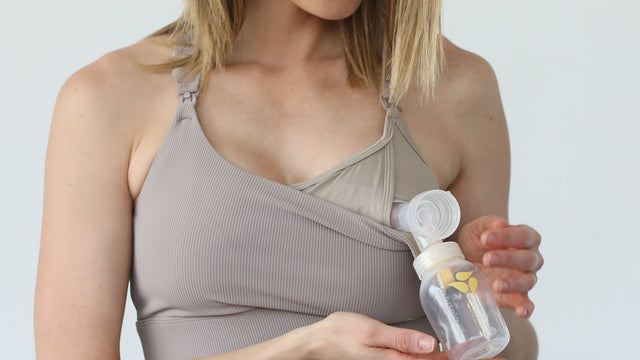
Before you budget for a breast pump, call your insurer: under the Affordable Care Act, health plans must cover the cost of a breast pump (grandfathered plans excepted), though the plan decides whether that means a manual or electric model. If you want a wearable or a second pump for work, the Haakaa silicone pump is $26.99, and Cimilre portable pumps run $169.99 to $208. Our pumping at work guide covers what to ask your employer.
Formula is the biggest variable in the recurring budget, and it varies too much by brand and by how much your baby drinks to give one honest number here. Our formula feeding guide walks through estimating it from your baby's intake, and how to spot when a bigger tub actually costs less per ounce.

Average Cost of a Nursery
A nursery's cost is mostly the crib. A Milk Street Baby Branch convertible crib starts at $399, an Oeuf Sparrow is $1,099, and the Charlie Crane KIMI at $891 bundles the mattress and topper, which most cribs leave for you to buy separately. Add two fitted sheets — from $17.55 each from Dreamlet to $37.80 for Sweet Bamboo — a monitor and a sound machine, and a basic nursery comes to about $571 at entry prices or about $1,517 with premium picks, plus the mattress.
Monitors span the widest range of anything in the nursery. A Roar audio-and-video monitor is $119.99; a Babysense two-camera split-screen monitor is $214; and the Smart Nursery with breathing-motion sensing is $314.99. Sound machines are the cheap win: a Sleeping Pal koala sound machine is $16.99 and a Babelio pocket white-noise machine is $27. Our best baby monitors guide explains when the breathing-motion tier is worth the extra.
A changing table is optional: a Parker Baby Co. changing pad is $12 and sits on any dresser, and a Natemia portable pad at $30.40 doubles for travel. Swaddles and sleep sacks are the other nursery line worth planning by size: SwaddleDesigns cotton wraps start at $15.95 for two, an Angel Dear sleep bag is $52, and our swaddle vs sleep sack guide explains when to switch.

The Three Biggest Expenses
Childcare
Childcare is the single largest expense for most families with young children — often exceeding housing costs. Child Care Aware of America put the national average price of child care at about $10,600 a year in 2021 — roughly 10% of a married couple's average income and 35% of a single parent's — and prices vary dramatically from state to state. This is the expense that shapes the most family financial decisions — including whether both parents work, where you live, and when you have additional children. Our childcare options guide compares centers, in-home care, nannies and nanny shares.
Housing
Children need space. Many families upsize their housing after having a baby, which often means higher rent or a larger mortgage. Even without moving, there are added costs: baby-proofing, nursery furniture, higher utility bills, and eventually the need for a dedicated play area.
Healthcare
Adding a baby to your insurance plan increases premiums. Beyond that, well-child visits, vaccinations, sick visits, prescriptions, and dental care add up. What you pay out of pocket depends almost entirely on your plan's deductible and co-pays, so read the pediatric section of your policy before the baby arrives.
Hidden Costs Nobody Warns You About
Lost income during parental leave: The U.S. has no federal paid parental leave mandate. If your employer doesn't offer paid leave, you're looking at weeks or months of reduced or zero income during a period when expenses are spiking. Factor this into your savings plan well before the due date.
Convenience spending: Sleep deprivation leads to more takeout meals, grocery delivery surcharges, impulse purchases, and paying for services you'd normally DIY. Budget an extra $200–300/month for the first 6 months of "survival convenience spending."
Career impact: Time out of the workforce can mean slower salary growth, missed promotions, and career gaps — and it tends to fall hardest on mothers. While this isn't a line item in a budget, it's a real long-term financial impact worth planning for.
Activities and enrichment: Music classes, swim lessons, library programs, and birthday parties seem small individually but add up quickly. Budget $100–200/month for activities once your baby reaches toddlerhood.
The second baby: Much of the gear carries over, but a second child changes the stroller (a two-seater wagon starts at $299), the car, and the childcare bill. Our one to two kids guide and second baby registry guide cover what actually needs replacing.
What You Can Skip, Borrow or Buy Secondhand
Skip: a changing table (a $12 changing pad on a dresser does the same job), a wipe warmer, newborn shoes, a bottle warmer, and matching nursery sets. Buy the newborn clothing size in small quantities only.
Borrow: anything a baby uses for a few months and outgrows — a bassinet, bouncer, swing, play gym, infant bath support and high chair are the classic loaners. Ask before you register; a friend's KUKO bassinet is a $459 line item you may never need to buy.
Buy secondhand: clothing, board books, toys, and furniture like dressers and gliders. Facebook Marketplace, Mercari, Once Upon a Child stores, and community buy-sell groups are goldmines, and hand-me-down clothes are the single biggest saving in the first year.
Buy new: the car seat (unless you know its full history and have checked the expiration date printed on the seat itself), the crib mattress, bottle nipples and pacifiers. Our minimalist baby registry and budget baby registry guide show what a stripped-down list looks like.
Smart Saving Strategies
Create a baby registry strategically. Register for the expensive essentials (car seat, stroller, crib) and let friends and family help; add a cash fund so guests can group-gift the big-ticket rows in the table above. Most major registries offer a completion discount, typically 10–15% on anything not purchased by guests — our registry comparison quotes each program's current terms.
Buy secondhand and embrace hand-me-downs. Babies use items for weeks or months before outgrowing them. Baby clothes have an incredibly short wear cycle, and most parents are thrilled to pass along outgrown items. Accept everything offered and pass along what doesn't work.
Use a dependent care FSA and an HSA. For 2025, the most you can exclude from income through an employer dependent care assistance program is $5,000 ($2,500 if married filing separately), per IRS Publication 503. For tax years beginning after December 31, 2025, Public Law 119-21 raises that limit to $7,500 ($3,750 married filing separately) — check whether your employer's plan has adopted the higher cap before open enrollment. Health savings accounts (HSAs) cover medical costs with pre-tax dollars. Both reduce your tax burden meaningfully.
Start the long-term accounts early, but in order. If your baby is eligible for a Trump Account, our guide explains how contributions work; a 529 plan can follow once your own emergency fund and retirement contributions are on track. Our budgeting for a new baby guide puts these in sequence.
Reassess subscriptions and recurring expenses. A new baby is a natural reset point for your budget. Cancel unused subscriptions, renegotiate insurance rates, and redirect discretionary spending toward baby necessities.
This article is general information, not financial advice. Your own numbers depend on your income, insurance, leave policy and where you live.
Frequently Asked Questions
How much do baby items cost in the first year?
Buying one of everything at entry prices — crib, bassinet, infant car seat, stroller, monitor, carrier, bath, high chair, play gym and a starter pack of diapers, bottles, swaddles and clothes — comes to about $1,830 at today's prices, and about $5,381 if you choose premium picks in every category. Diapers, clothing and feeding then add a recurring monthly cost on top.
How much does a baby cost per month?
The recurring part of a baby's budget is diapers, clothing and feeding. Disposable diapers run about $130 to $200 a month at 0.67 per diaper, a rotation of clothes costs $104 to $232 per size, and formula, if you use it, is the biggest variable. Childcare, when it starts, usually dwarfs all three.
What is the average cost of diapers per month in 2026?
Using a 36-pack of bamboo disposables at $24 (0.67 per diaper), eight changes a day costs about $160 a month and ten changes a day about $200. As your baby moves to medium sizes and fewer changes, six a day at 0.72 per diaper comes to roughly $130 a month. A cloth stash of 24 newborn all-in-ones costs about $389 up front.
How much should I save before having a baby?
A common rule of thumb is 3–6 months of expenses as a general emergency fund, plus an additional $3,000–$5,000 specifically for baby-related costs. If you'll have unpaid parental leave, factor in that income gap. The exact amount depends on your insurance coverage, leave policy, and childcare plans.
Is breastfeeding really free?
Breastfeeding eliminates the formula bill, but it's not entirely free. A breast pump (which most health plans must cover), storage bags, nursing bras, nursing pads, and potentially lactation consultant visits all have costs. Breastfeeding is significantly less expensive than formula feeding, but "free" is an oversimplification.
When do costs go down?
Costs shift rather than decrease. Diapers and formula end, but preschool tuition begins. Gear purchases slow, but activity costs rise. Many families find that costs stabilize (or even decrease slightly) between ages 3–5 when childcare becomes less expensive and children are less dependent on specialized gear.
Should I start a 529 college savings plan right away?
Starting early maximizes compound growth. Even small contributions ($25–50/month) from birth add up significantly by age 18. Many states offer tax deductions for 529 contributions. That said, prioritize your own financial stability first — retirement savings and emergency funds should come before college savings.
How do I handle unsolicited financial advice from family?
Smile, thank them, and make your own decisions. Every generation raised children on different budgets with different priorities. Your financial plan should reflect your values, your income, and your family's specific needs — not someone else's expectations.
Keep reading
 MoneyTrump Accounts: A Parent's Complete Guide
 Money529 Plans Explained: How to Start Saving for College
 MoneyBudgeting for a New Baby: A Practical Financial Guide
 MoneyChildcare Options Compared: Daycare, Nanny, and More
 GearBest Baby Registry 2026: 10 Platforms Compared (Discounts, Welcome Boxes & Fine Print)
 GearLorena Canals Washable Rugs Review: Are $200-$600 Machine-Washable Rugs Worth It?
 GearKindred Bravely Sublime Nursing Bra Review: What Thousands of Real Moms Actually Think
 RegistryBaby Registry Quiz: Build Your Personalized Checklist
 FamilyGoing from One to Two Kids: A Complete Transition Guide (2026)
 PostpartumDiastasis Recti: Understanding, Preventing and Healing Core Separation (2026)
 PostpartumPelvic Floor Recovery After Birth: What Every New Parent Should Know (2026)
 FeedingPumping at Work: The Complete Back-to-Work Breastfeeding Guide (2026)