

 Buying guide
Best Montessori Toys 2026
 ·
April 1, 2026
Last updated: October 2026
The best Montessori toys do one job well, are made from wood or another natural material, and let your child see for themselves when they have got it right. That is the whole test. An object permanence box, a set of nesting bowls, a single-shape sorter, a Pikler triangle: each gives a child one clear problem and no batteries, buttons or songs to do the thinking for them.
Below are 60 Montessori-inspired toys in ten stages, from black-and-white cards for a newborn to a wooden gear set for a 5-year-old, with a comparison table first, the reason each pick earns its place, and the signs that tell you your child is ready for the next stage. Skip to your child's age, or read through to plan ahead.
Montessori play doesn't require an expensive setup. Three or four well-chosen toys on a low shelf, each in its own tray or basket, beat a bin of plastic every time. Rotate what is out every few weeks and your child meets an "old" toy as if it were new.
Best Montessori Toys at a Glance
Eleven picks, one per stage, chosen because each isolates a single skill and is built from a material your child can feel. Prices are what each toy sells for today; tap a row for the full listing.
| Toy | Best stage (our pick) | Material (per listing) | Price | Why it earns a spot | |
|---|---|---|---|---|---|
 |
Wee Gallery Art Cards for Baby | 0–6 months | Sturdy board, matte lamination, rounded corners | $26 | Six black-and-white animals on 5×7 in cards: the first toy a newborn can really look at. |
 |
Montessori Object Permanence Box | 6–12 months | Basswood plywood, water-based paint | $15 | The classic first Montessori toy: drop the ball in, watch it roll back out. |
 |
HABA Magica Clutching Toy | 6–12 months | Wood on elastic, water-based lacquer | $12.99 | Balls and shapes on elastic that a 6-month-old can grab, squash and rattle (sized about 4×3 in). |
 |
Natural Wooden Nesting Bowls (5 pcs) | 6–18 months | Unpainted basswood | $10.40 | Stack, nest, fill and empty: five bowls that stay in rotation for a year. |
 |
PlanToys First Shape Sorter | 12–24 months | Wood, blocks tethered on a string | $17.99 | Three 3D shapes and a handle; the string means no lost pieces in the car. |
 |
Little Village House Blocks (15 pcs) | 1–3 years | Beech wood, water-based dye | $33 | House-shaped blocks that stack, line up and become a small-world village. |
 |
Speedy Monkey Xylo Bench | 1–4 years | Certified-forest wood, 3 balls | $34.99 | Hammer the balls through and they ring the xylophone on the way down. |
 |
Mushie Wooden Farm Puzzle | 2–5 years | FSC-certified wood, non-toxic paint | $23.75–$27 | Eight chunky barnyard animals with smooth edges, sized for small hands. |
 |
Wooden Fruits & Vegetables Cutting Playset (30 pcs) | 2–5 years | Wood | $38 | Practical-life play: a wooden knife, a board and produce that clicks apart. |
 |
Tiny Land 7-in-1 Pikler Triangle Set | 2–6 years | Wood, folding frame, anti-slip pads | $171 | Climb, slide and rock on one folding frame with seven set-ups. |
 |
PlanToys Nuts & Bolts | 3–6 years | Chemical-free rubberwood | $35.99 | Four bolts and geometric nuts to twist, sort and build small structures with. |
Sensory Play & Discovery (0-6 Months)
The best Montessori toys for a baby under 6 months are the ones that meet a newborn where their eyes are: high-contrast black-and-white images held 8 to 12 inches away, a soft sensory strip clipped to the stroller or laid out for tummy time, and a simple mobile that moves on its own in the air. A newborn cannot yet reach, so the toy's whole job is to give them something worth looking at.
Start with Wee Gallery's board-book-weight art cards: six animals in black and white on 5×7 in cards with rounded corners, which prop up against a basket or a crib rail. The Etta Loves sensory strips are the clever next step: one side is scaled for a newborn to 4 months, flip it over and the patterns are sized for 5 months and up, so the same strip stays useful through the stage. HABA's wooden clutching toys sit on the shelf ready for the day your baby's hands open.
What to skip at this age: anything that lights up or plays a tune. A newborn's attention is the thing you are protecting, and a toy that performs will always win it from a toy that waits. For a stage-by-stage look at the cards and mobiles themselves, see our high contrast baby toys guide.

First Grasping Toys & Rattles (6-12 Months)
At 6 months babies reach on purpose, and the toy to buy is the one that rewards the reach. A wooden grasping toy, a natural-rubber rattle and the object permanence box are the three classic Montessori toys for 6 to 12 months.
The object permanence box is the single most "Montessori" toy you can buy. Your baby drops the ball through the hole, it vanishes, and a second later it rolls out into the tray. Somewhere between 8 and 12 months that becomes a game they will repeat twenty times in a row, and that repetition is the lesson: things still exist when you cannot see them. HABA's Magica clutching toy, wooden balls and shapes strung on elastic, is designed for 6 months and up per the listing and is small enough (about 4×3 in) to pass hand to hand.
For rattles, choose by what goes in the mouth. Bannor Toys finishes its wooden rattles in beeswax and flaxseed oil and adds food-grade silicone rings; Oli&Carol's vegetable rattles are 100% natural rubber with upcycled cherry seeds inside for the sound. Neither needs a battery, and both go straight in the mouth without a worry. Our teethers and rattles guide goes deeper on materials.

Stacking & Nesting (6-18 Months)
Stacking and nesting toys are the bridge from grabbing to building. Between 6 and 18 months your baby moves from a whole-hand rake to a thumb-and-finger pinch, and a set of nesting bowls or a rainbow stacker gives those new fingers a job: fit the small one inside the big one, balance the arch on the arch, knock the whole thing down and start again.
Five unpainted basswood nesting bowls from Green Elephant cost about the same as a coffee and a pastry and do more than most $60 toys: they stack, nest, sort by size, hold snacks at the play kitchen and double as scoops in the bath. The same maker's 12-piece large rainbow stacker (14 in wide, pine, water-based dye) is the piece that grows the furthest: an arch to balance at 1, a tunnel for cars at 2, a bridge for peg dolls at 3.
Our stacking toys collection is the widest set to choose from here: wooden rainbow stackers, nesting cups and balancing stones, all open-ended enough to stay in rotation long after the ring-on-a-post stage is over.

Shape Sorters & Sorting (12-24 Months)
A shape sorter is the first toy that tells your toddler "no" without a word: the triangle will not go through the square hole however hard it is pushed. That built-in correction is why a sorter belongs on every Montessori shelf from about 12 months. Start with one that has three shapes, not twelve.
PlanToys makes the two sorters to compare. The First Shape Sorter has three 3D shapes tethered to the base on a string and a handle to carry it by, so nothing rolls under the sofa; the Geo Sorting Bucket adds a cylinder, square and triangle, a lid that opens to retrieve the pieces (a small object permanence lesson of its own) and a handle for the car. Once the shapes are easy, move sideways rather than up: a color-sorting tray with bowls and balls, or a sorting tree with rings, keeps the same "match it, check it" loop going at 18 to 24 months.

Wooden Blocks & Building (1-3 Years)
Wooden blocks are the one Montessori toy with no upper age. A 1-year-old stacks two and knocks them down; a 2-year-old builds a wall; a 3-year-old builds a house for the peg dolls and tells you who lives there. Buy a set with plain shapes and a tray to tidy them into, and skip anything with letters or pictures printed on every face.
Two sets cover most homes. The 15-piece Little Village set from Green Elephant is beech-wood houses in a 9.4×8.5 in tray: it stacks like blocks and lines up like a town, which is exactly the two things a 2-year-old wants to do. The 100-piece stepped pyramid set is the long-term investment: plain cubes and cuboids in basswood, graded in size, in a wooden tray, enough for two children to build side by side. For more block systems and how they compare, see our best building toys for toddlers guide.

Musical Instruments (1-4 Years)
A Montessori instrument is a real instrument scaled down, not a toy that plays a song when a button is pressed. A wooden xylophone, a small drum, a tongue drum or a ukulele lets your toddler make one sound, hear it, and make it again louder or softer, and that cause-and-effect loop is the point. Pick one or two; a full band set at 18 months is mostly noise.
The Speedy Monkey Xylo Bench is the best first instrument because it is two toys in one: hammer the three balls through the top and each one rings the xylophone on the way down, and the xylophone section plays on its own once the hammering phase passes. The listing recommends it from 12 months, and at 10×4×5 in it fits a shelf tray. Plan Toys' Musical Band (two drums, cymbal, guiro, over 13 in tall, drum heads of natural-rubber-coated fabric) is the step up at 3 to 4 years, when the child wants to keep a beat rather than just make one. Our best musical toys for toddlers guide ranks the rest.

Puzzles & Problem Solving (2-5 Years)
The right first puzzle has chunky pieces, one shape per slot and no more than eight pieces. A 2-year-old is matching outline to hole, not building a picture, so a farm-animal tray puzzle teaches more than a 24-piece jigsaw does. Add pieces as the child adds patience, and expect to go from 3 pieces at 18 months to around 20 by age 4 or 5.
Mushie's wooden farm puzzle is the one to start with: eight barnyard animals cut from FSC-certified wood, smooth-edged and chunky enough to lift without a knob. Bannor Toys' chunky shape puzzle goes the other way, plain geometric shapes about 2 in across on an 11.25×7.5 in base, finished in beeswax and flaxseed oil, which makes it a shape lesson as much as a puzzle. For a 4- or 5-year-old, Plan Toys' Build A Face (a two-sided face plus 21 features in a cloth bag) is less a puzzle than a conversation starter about feelings, and it works solo or with a sibling.

Play Kitchens & Pretend Play (2-5 Years)
Montessori calls this "practical life": the toddler who wants to do what you do. A play kitchen with a wooden cutting set is the best-loved version, because slicing a wooden tomato and serving it to a parent is real work at 2, and by 4 the same kitchen is the stage for an elaborate restaurant.
The Tiny Land Iconic kitchen earns its place with details a toddler notices: knobs that click, an oven door on a magnet, an ice maker and a freezer that open and close, and storage above and below the sink so the child can put things away themselves. Pair it with Green Elephant's 30-piece cutting playset: fruits and vegetables held together so they click apart under a wooden knife, which is the sound every 2-year-old is chasing. Peg dolls and a basket of wooden play food complete the set-up. We compare the kitchens themselves, size by size, in our best play kitchens guide.
Real practical life needs no toy at all: a learning tower at the counter lets a 2-year-old wash the vegetables, stir the batter and pour their own water. Our step stools and learning towers guide covers which ones are stable enough.

Balance, Climbing & Movement (2-6 Years)
Montessori climbing toys let the child set the challenge: how high, how fast, when to stop. A Pikler triangle, a climbing arch that flips into a rocker and a wobble board are the three pieces that serve a child from about 2 to 6, and all three fold or stack away in an apartment.
Montessori climbing toys for toddlers
The Tiny Land 7-in-1 Pikler set is the best value because one folding frame covers climbing, sliding and rocking in seven set-ups, with reinforced corners and anti-slip pads, and the listing rates it to 160 lb, so it is not outgrown at 4. FitWood's climbing arch and rocker is the heirloom version: birch plywood and aspen, 39.4×23.6×21.3 in, rated to 130 lb per the listing, and designed to be a baby gym, a rocker, a play fort and a kids' table across the whole early childhood. If you are choosing between triangles, our Pikler triangle guide sets them side by side, and the wider indoor climbing toys for toddlers collection includes rope ladders and Swedish walls for older kids.
A wobble board is the piece to add at 3: Bunny Hopkins' maple board is rated for up to 450 lb per the listing, so it is also a parent's stretching bench, a bridge, a slide and a reading nook. See our wobble boards guide for sizes, and play furniture and climbing toys for the larger pieces.

STEM & Educational Toys (3-6 Years)
The Montessori version of a STEM toy is a wooden mechanism your child can see all the way through: a bolt turning in a nut, a gear driving the gear beside it, a beam that only holds if the joint is square. From about 3, these kits teach the physics that an electronic kit hides inside a circuit board, and nothing needs a battery.
PlanToys' Nuts & Bolts is the first one to buy: four bolts and matching geometric nuts in chemical-free rubberwood that twist, sort and stack into small structures, and the pieces mix into the block basket afterwards. Quercetti's Kaleido Gears (55 pieces on interlocking base plates, a crank that spins the whole chain) is the 4-to-6-year-old upgrade, and Miniland's Eco Beams and Egmont's wooden connecting shapes extend the same build-and-test idea into larger structures.

What Makes a Toy Montessori?
A toy is Montessori-inspired when it passes four tests: it isolates one skill, it is made from a natural material, it is a real-world object or a simplified version of one, and it does nothing on its own. "Montessori-inspired" on a label means a maker is aiming at those principles; the toys in Maria Montessori's original classrooms were teaching materials, and nearly everything sold for home use today is an adaptation.
- One skill at a time. An object permanence box teaches one idea. A cube with five activities on five faces teaches five things badly and lets the child flit between them.
- Natural materials. Wood, cotton, natural rubber, felt and metal give honest feedback: a wooden block is heavier than a foam one and sounds different when it lands.
- Self-correcting. The best Montessori toys show the child when something is wrong without an adult: the shape will not fit, the bowl will not nest, the tower falls.
- No electronics. Lights, songs and recorded voices entertain the child and do the thinking. A Montessori toy waits.
- Real over pretend where possible. A child-sized wooden knife and a real banana beat a plastic cutting set; a learning tower at the sink beats a toy sink.
A simple way to apply this at home: put out three to five toys on a low shelf, each in its own tray, with nothing in a bin. If a toy has not been touched in two weeks, swap it; if your child plays with one every day, leave it out. Green Elephant's spinning drum (six pastel faces, bells inside, nothing else) is a good example of how little a toy needs to do.

Best Montessori Toys by Age: Quick Answers
Best Montessori toys for babies (0-12 months)
For a baby under 1, the best Montessori toys are black-and-white art cards, a reversible sensory strip, a wooden grasping toy, a natural-rubber or beeswax-finished rattle and an object permanence box: together about $110 at today's prices, and every one of them gets used daily.
Best Montessori toys for toddlers (1-2 years)
The best Montessori toys for toddlers are a nesting bowl set, a three-shape sorter, a rainbow stacker, a first set of plain wooden blocks and a hammer-and-ball xylophone, because each one gives a 1-year-old a single job with a visible result.
Best Montessori toys for 3-4 year olds
At 3 and 4, move to a play kitchen with a cutting set, an 8-to-12-piece tray puzzle, a Pikler triangle with a ramp, a wobble board and a wooden nuts-and-bolts set; the child now wants to do real work and solve real problems.
Best Montessori toys for 5 year olds
The best Montessori toys for 5 year olds have genuine mechanics and an outcome the child can judge: a gear-building set with a crank, a lock box with eight different latches, a 20-plus-piece puzzle, a 100-piece graded block set and a full-size wobble board the whole family can use.

Montessori Gifts That Work in Any Home
The safest Montessori gift is a toy that needs no set-up and no explaining: a wooden rattle for a newborn, nesting bowls or an object permanence box at the first birthday, a chunky puzzle or a cutting set at 2, a Pikler triangle or wobble board at 3, and a nuts-and-bolts or gear set at 4 or 5. Avoid anything that needs floor space the family may not have, and anything that plays a song.
A busy board is the one exception to the "one skill" rule that still makes a good gift: Wonder and Wise's plywood house board carries twelve activities (a maze, a clock with moving hands, an abacus, gears, a key that opens a door, a mirror behind it) and plays flat on the floor or stood up, so a 1- to 3-year-old can work through them sitting or standing. For a first-birthday shortlist that goes beyond toys, see our first birthday gift ideas guide.

Quick Verdict
Best first Montessori toy: the object permanence box ($15), because it teaches one idea a baby will repeat for months.
Best for problem-solving: a three-shape sorter at 1, a chunky tray puzzle at 2 and a wooden nuts-and-bolts set at 3, each one self-correcting.
Best overall value: plain wooden blocks and a folding Pikler set; one purchase each, and both stay in use from 1 to 6.
Shop all Montessori toys at EasyTot →
Frequently Asked Questions
What are Montessori-inspired toys?
Montessori-inspired toys are simple, usually wooden toys that isolate one skill at a time, show the child when they have got it right, and leave the activity to the child instead of entertaining them. An object permanence box, a single-shape sorter, nesting bowls and a Pikler triangle are the classic examples; a toy with lights, songs and buttons is not.
At what age should you start Montessori toys?
You can introduce Montessori toys from birth. Black-and-white cards and a soft sensory strip work for a newborn, a grasping toy and an object permanence box suit 6 to 12 months, and stacking toys and shape sorters follow around the first birthday.
What are the best Montessori toys for a 1-year-old?
The best Montessori toys for a 1-year-old are an object permanence box, a set of nesting bowls, a single-shape sorter and a small rainbow stacker. Each one gives the child one clear job and a result they can check themselves, which is what holds a 12-month-old's attention.
What are the best Montessori toys for 5 year olds?
For a 5-year-old, look for toys with real mechanics and a real outcome: a wooden nuts-and-bolts set, a gear-building set, a lock box with eight different latches, a 20-plus-piece puzzle and a wobble board rated for the whole family. At this age the child wants a problem to solve, not a toy that solves it for them.
Are Montessori toys better than other toys?
Montessori toys excel at encouraging independent, focused play and skill-building. They are not better in every context; your child will also love imaginative role-play with friends and active outdoor play. The best toy collection balances Montessori principles with other types of play: pretend, physical and social.
Should I buy multiple toys at once or introduce them gradually?
Fewer toys, rotated regularly, often lead to deeper engagement than a room full of options. Consider buying 3 to 5 toys across different developmental areas and rotating them every 2 to 4 weeks. This keeps play fresh and helps you see which toys truly resonate with your child before investing more.
Is a Pikler triangle a Montessori toy?
A Pikler triangle comes from Emmi Pikler's approach to free movement rather than from Maria Montessori, but it fits a Montessori home because the child chooses how high to climb and when to stop. A folding 7-in-1 set with a ramp and an arch covers climbing, sliding and rocking from about 2 to 6 years.
Do Montessori toys have to be wooden?
No. Wood is preferred because it gives honest feedback (weight, grain, the sound of a block landing), but natural rubber rattles, organic cotton sensory strips, felt play food and sturdy board cards all belong on a Montessori shelf. What matters more is that the toy has no batteries, no screen and one clear purpose.
How do I care for wooden toys?
Wooden toys are durable but benefit from simple care. Wipe with a slightly damp cloth to clean; avoid soaking them. A light coating of food-grade mineral oil or beeswax can refresh the wood. Store in a dry place, and inspect occasionally for splinters. With good care, quality wooden toys last through multiple children.
How do I know which age range is right for my child?
Age ranges are developmental guidelines, not strict rules. Every child develops at their own pace. If your 18-month-old loves puzzles meant for 2-year-olds, that is wonderful; let them play. Watch for signs of frustration or boredom and adjust accordingly. A toy that is slightly challenging is often more engaging than one that is too easy.
Keep reading
 GearLorena Canals Washable Rugs Review: Are $200-$600 Machine-Washable Rugs Worth It?
 GearBest Baby Loveys & Security Blankets (2026)
 GearBest Baby Blankets 2026
 GearBest Kids Headbands & Hair Accessories 2026
 GearBest Musical Toys for Toddlers 2026
 GearBest Washable Rugs for Kids & Nurseries 2026
 GearBest Nursery Rugs 2026: Washable, Non-Toxic and Natural Picks
 GearBest Pikler Triangles 2026
 GearBest Christmas Decor & Holiday Stockings 2026
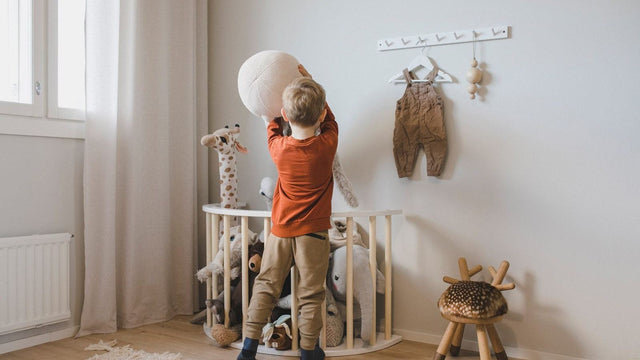 GearBest Step Stools & Learning Towers for Toddlers (2026)
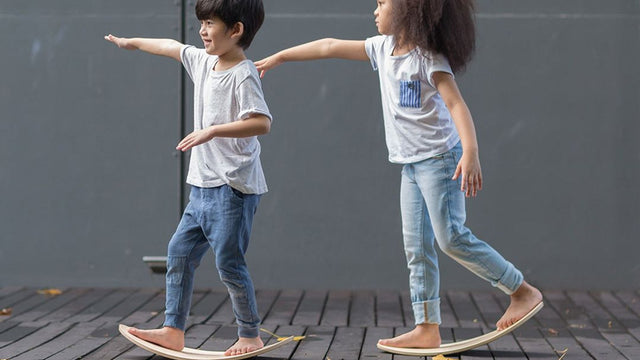 GearBest Balance & Wobble Boards for Kids (2026)
 GearBest Outdoor Toys for Toddlers: Active Play Guide (2026)
 GearGreen Elephant Stepping Stones Review: Are They Worth It?
 GearKids Activity Tables and Chairs: The Complete Sizing Guide
 GearHigh Contrast Baby Toys: A Stage-by-Stage Guide
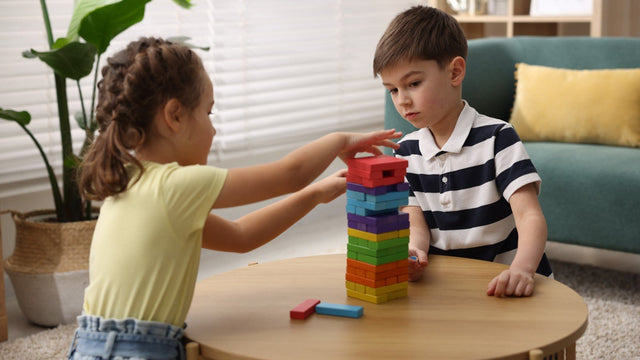 GearBest Building Toys for Toddlers 2026
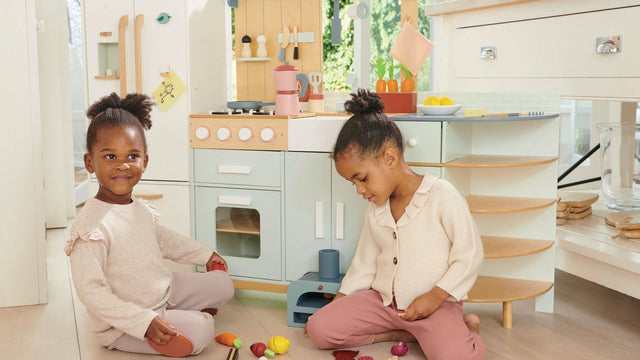 GearBest Play Kitchens 2026: Wooden, Budget and Montessori Picks
 GearBest Play Furniture & Climbing Toys 2026
 GearBest Teethers & Rattles for Babies 2026
 RegistryBest First Birthday Gift Ideas 2026
 GearLlorens Dolls Review 2026: Crying Baby Dolls, Newborns and Fashion Dolls, Sizes, Ages and What to Buy
 MilestonesImportance of Pretend Play for Kids 2026