

 Buying guide
Best Baby Monitors 2026: Video Monitors With Camera, Audio and Smart Socks
 ·
April 1, 2026
·
April 1, 2026
Most "best baby monitor" roundups rank whatever pays a commission. We did the opposite: we measured each brand's market share by search demand, read the hands-on tests, and laid out the praise and the complaints for every type of monitor — socks, contact-free breathing monitors, and plain video and audio.
A monitor handles the watching; sound machines and soothers handle the settling that comes before it.
We compared hands-on tests (Fathercraft, Milk Drunk, Mumsnet) and Google search-volume data for market share, and cross-checked specs and prices. Where a monitor has a real downside — or barely any track record yet — we say so plainly.
The market at a glance: who actually dominates
Before the reviews, the most useful single number — share of search, a recognized proxy for market share (how many US parents look each brand up monthly):
Worth remembering as you read: the most-searched monitor isn't automatically the best one for you.
Baby monitors by type — quick comparison
Baby monitors fall into three families. Find your category first, then read the deep dives below — every name links straight to the product.
| Monitor | How it works | Price | Rating | Best for |
|---|---|---|---|---|
| Sock & wearable — tracks oxygen + heart rate | ||||
| Owlet Dream Sock | Foot-sock sensor | ~$299 | — | Vitals & peace of mind |
| Sense-U Smart Sock | Foot-sock sensor | $160 | — | Budget vitals tracking |
| Hubble Guardian+ | Ankle-band sensor | $164 | — | Wearable + soothing/app |
| Contact-free breathing — nothing worn by baby | ||||
| Babysense 7 | Under-mattress pads | $118 | — | Value breathing, no WiFi |
| Miku Pro | Radar + camera | ~$349 | — | No-subscription smart breathing |
| Nanobébé Aura | AI camera | $183 | — | Budget AI breathing (new) |
| Nanit Pro | Overhead cam + breathing band | ~$300 | — | Premium camera + sleep data |
| Video & audio — the simpler monitors | ||||
| Infant Optics DXR-8 | Non-WiFi video | ~$165 | — | Hack-proof video |
| Babysense HD | Non-WiFi split-screen video | $176 | — | Two cameras, no app |
| Eufy E21 | WiFi / local video | ~$170 | — | Range & picture quality |
| VTech | Non-WiFi video | from ~$60 | — | Mainstream budget |
| Roar | Rugged audio | $120 | — | Travel & the outdoors |
| Zooby | No-WiFi plush video | $179 | — | Kid-friendly, hack-averse |
| Babelio | Car + home camera | $131 | — | Watching baby in the car |
Owlet Dream Sock — the most-debated baby monitor

No baby product divides parents like the Owlet Dream Sock — a wearable foot sensor that tracks your baby's oxygen and heart rate and alerts your phone if readings leave a set range. It's the best-selling smart baby monitor in the US, yet parents who credit it with their sanity sit right beside parents who returned it in a week. Here's the detail.
Peace of mind — the reason most parents buy it
Its core appeal is simple: it lets frightened, sleep-deprived parents actually rest. The through-line is emotional, not clinical: these parents are buying the ability to close their eyes.
The peace-of-mind paradox — for some parents, it backfires
The same feature that soothes some parents agitates others. The pattern is consistent — the Owlet amplifies whatever your baseline is. Parents who can set it and trust it sleep better; those prone to checking obsessively do not. If you're the second type, skip it.
False alarms — the top complaint, with a big asterisk
The most-cited concern — but the cause is usually sock fit, not a faulty sensor: a sock that is too big or has shifted in the night is what triggers most alerts. A dislodged sock plays a gentle song, not the emergency alarm.
When it genuinely earned its keep
The readings matter most for parents of NICU graduates, preemies and sick babies, where a low-oxygen flag during an illness is information a pediatrician can act on. If your baby has a medical history, that's worth weighing.
The skeptics' case — and the safety reality
Plainly: the Dream Sock is an FDA-cleared wellness device for peace of mind — not proven to prevent SIDS, and not a substitute for safe sleep. Follow AAP guidance and your pediatrician.
Bottom line: the Owlet turns invisible vital signs into a number on your phone. For some parents that's the difference between sleeping and not; for others it's fuel for the fire. Only your own temperament will tell you which parent you are — but it's the question to answer before spending ~$300.Check the Owlet Dream Sock
Nanit Pro — the high-end favorite
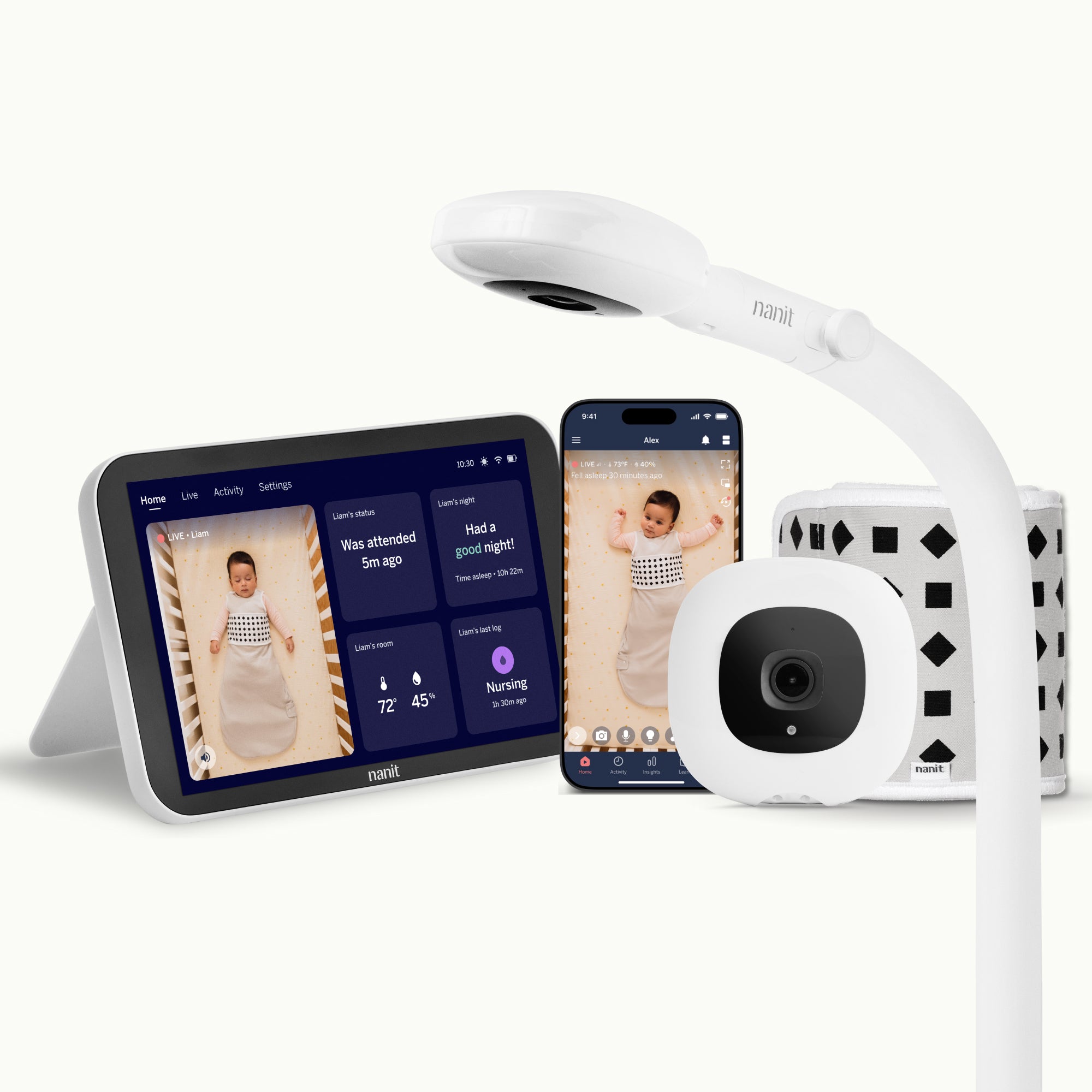
An overhead, wall-mounted camera with a breathing band and detailed sleep analytics — the most feature-rich smart monitor, and the one with the loudest love-it/hate-it divide.
What parents love
Two things win people over: the hardware and the reassurance. The camera and app draw specific praise — and crucially, you don't need the paid plan for core monitoring. For anxious parents the breathing band delivers the peace of mind to sleep.
What parents flag — and it's mostly money
The dominant complaint, by a wide margin, is the subscription: a $300+ monitor whose sleep-analytics features sit behind a paid plan. Close behind: connectivity (a travel router may be needed to get it working on hotel WiFi), and the room-temperature sensor reading wildly wrong. The breathing band, like the Nanit's rivals, throws false alarms unless baby sleeps in minimal layers.
The honest balance
For most families it simply works: it's stable, it travels easily, and it is only expensive if you need features beyond basic monitoring.
Bottom line: the most feature-rich camera-plus-breathing system with the slickest app — if you accept a subscription for the full experience and dress baby light enough for the band to read. Buy it for the hardware; resent it for the monthly fee.Check the Nanit Pro
Miku Pro — no-subscription smart breathing

The Miku Pro is the Nanit's closest no-subscription rival: radar-and-camera breathing tracking with no wearable. It's also the monitor where the gap between professional reviews and owner experience is widest, so here's both sides.
What reviewers love
Independent testers rate it highly. Mom-of-two Alex Magann says it gave her "so much peace of mind, and provides so much benefit even beyond the baby years," with the upside that "you don't need to place any additional electronics on their body" (Milk Drunk). Fathercraft confirms "all of Miku's analytics features are available without a subscription" and that it "gives the Nanit a run for its money," noting the app is much improved (Fathercraft).
What owners flag
Owners are blunter, especially on value: app compatibility has been limited (iOS/iPad only), and the respiratory-rate readings and smart features don't always feel as reliable as the price implies. (Note: many of these complaints predate Miku's app overhaul, which testers say fixed a lot.)
Bottom line: the no-subscription alternative to the Nanit's smarts with no subscription — and testers love it. Just go in clear-eyed: it's expensive, and some owners find the smart features less rock-solid than the price implies.Check the Miku Pro
Babysense — the value workhorse

Babysense splits into two product lines: a contact-free under-mattress breathing monitor, and non-WiFi HD video monitors (HD S2, Max View, True Sleep). It's the rare value brand where multi-year owners stay genuinely happy.
What parents love
Among owners with years of use the verdict is consistent: easy setup, portability, and sturdy cameras that survive being dropped. The appeal is a reliable, non-WiFi monitor with no subscription at roughly half the price of the marquee brands.
What parents flag
Honest nitpicks from those same long-term owners: you can't zoom in split-screen mode, the speaker audio can sound stuttery, the parent unit may drop connection about once a month (a restart fixes it), and the main unit isn't waterproof.
Bottom line: the value pick that long-term owners actually keep. If you want dependable breathing or video monitoring without WiFi, an app, or a subscription, Babysense punches above its price.Shop Babysense
Infant Optics DXR-8 — the durable no-WiFi classic
What parents love
Reliability and durability, over and over: owners describe units dropped dozens of times that still work. Because it has no WiFi, there's nothing to hack and nothing to glitch — a point parents raise specifically after bad experiences with smart monitors. Its active noise reduction reliably mutes a sound machine, and the interchangeable lens is a favorite touch.
What parents flag
Two things: the handheld's battery life is short (turn the screen off between checks to stretch it), and the image is merely okay — standard-definition by modern standards. There's also no phone app, by design.
Bottom line: not smart, not sharp — but cheap, tank-durable and rock-solid. For parents who want zero apps and zero hacking risk, it's the default for good reason.Check the Infant Optics DXR-8
Eufy SpaceView — range champ, durability questions

What parents love
Range and image quality on a closed, no-WiFi system: a crisp picture, and a range that lets you step into the yard or down the driveway without losing signal.
What parents flag
Durability and customer support recur in the same breath: reports of a monitor bricking itself during a firmware update, or a camera unit breaking after about six months, answered with a discount coupon rather than a replacement. The hardware impresses; the after-sales experience doesn't always.
Bottom line: excellent range and picture for the money — just buy it knowing a minority of owners hit hardware faults and a frustrating support response.Check the Eufy SpaceView
Sense-U Smart Sock — the budget oxygen/heart-rate alternative

If you want oxygen and heart-rate reassurance without the Owlet's price, the Sense-U is the in-stock alternative. Its public track record is still short next to the Owlet's, so treat early enthusiasm as encouraging-but-early. Like every sock, it's a wellness device for peace of mind — not a medical device, and not proven to prevent SIDS.
Shop the Sense-U Smart SockNanobébé Aura — the budget AI breathing monitor (new, mixed reviews)

The Aura's pitch is appealing on paper: AI breathing detection with no wearable, a built-in sound machine, and no subscription, for well under the price of a Nanit. But it's a new product, and the early verdict is the most divided of any monitor here. The recurring complaint is consistency: breathing detection and the sound machine that work some of the time, and features that need the app open. It's too early to call — the upside is real if the software matures, but it hasn't earned the track record of the established breathing monitors yet.
Shop the Nanobébé AuraMore options: value & specialty picks
These are newer or specialty monitors with limited public review coverage so far — here's the straight spec, price and who each is for.
- Roar ($119.99): rugged, fully-wireless, 20+ hr battery, 1,000-ft range. For: travel and the outdoors, where WiFi monitors fail. Few public reviews yet, but the niche is real.
- Hubble Guardian+ ($164): a wearable ankle sensor tracking heart rate, oxygen, movement and temperature, doubling as an audio monitor. For: parents wanting a wearable with a soothing/app ecosystem.
- Zooby ($179): a no-WiFi monitor built into a plush animal. For: hack-averse parents who want a comforting, kid-friendly design.
- Babelio Car Camera ($131): a 2-in-1 monitor for the rear-facing car seat and home. For: families who drive a lot and want eyes on baby in the car.
How to Choose
Breathing reassurance, no wearable? Miku Pro (premium) or Babysense (value) — both no subscription; the Nanit if you'll pay the monthly fee for the slickest app. Oxygen/heart-rate numbers? A sock — Sense-U (budget) or the Owlet — but only if a data readout calms you rather than feeds anxiety. Just see & hear baby, hack-proof? Non-WiFi video — Babysense HD, Infant Optics or Eufy. Travel a lot? Roar. And always weigh the subscription: Miku, Babysense and Nanobébé Aura charge nothing monthly; the Nanit gates some features behind a plan.
The full lineup at a glance
Every monitor compared in one place — names link to each product — to make your final call easier.
| Monitor | How it works | Price | Rating | Best for |
|---|---|---|---|---|
| Sock & wearable — tracks oxygen + heart rate | ||||
| Owlet Dream Sock | Foot-sock sensor | ~$299 | — | Vitals & peace of mind |
| Sense-U Smart Sock | Foot-sock sensor | $160 | — | Budget vitals tracking |
| Hubble Guardian+ | Ankle-band sensor | $164 | — | Wearable + soothing/app |
| Contact-free breathing — nothing worn by baby | ||||
| Babysense 7 | Under-mattress pads | $118 | — | Value breathing, no WiFi |
| Miku Pro | Radar + camera | ~$349 | — | No-subscription smart breathing |
| Nanobébé Aura | AI camera | $183 | — | Budget AI breathing (new) |
| Nanit Pro | Overhead cam + breathing band | ~$300 | — | Premium camera + sleep data |
| Video & audio — the simpler monitors | ||||
| Infant Optics DXR-8 | Non-WiFi video | ~$165 | — | Hack-proof video |
| Babysense HD | Non-WiFi split-screen video | $176 | — | Two cameras, no app |
| Eufy E21 | WiFi / local video | ~$170 | — | Range & picture quality |
| VTech | Non-WiFi video | from ~$60 | — | Mainstream budget |
| Roar | Rugged audio | $120 | — | Travel & the outdoors |
| Zooby | No-WiFi plush video | $179 | — | Kid-friendly, hack-averse |
| Babelio | Car + home camera | $131 | — | Watching baby in the car |
Shop all baby monitors at EasyTot →
Frequently Asked Questions
Do baby monitors prevent SIDS?
No. Oxygen/heart-rate socks (Owlet, Sense-U) and breathing monitors are wellness and peace-of-mind devices — not medical devices proven to prevent SIDS. Follow the AAP's safe-sleep guidance and your pediatrician.
Which monitors have no subscription?
Miku Pro, Babysense and Nanobébé Aura include full features with no monthly fee. The Nanit Pro keeps some sleep-tracking features behind a paid plan after year one.
Are false alarms a real problem?
With wearables and breathing bands, somewhat — Owlet false alarms are mostly tied to sock fit; Nanit's band similarly false-alarms unless baby sleeps in light layers. Many parents still felt the trade-off was worth it; others found it added anxiety.
WiFi or non-WiFi?
WiFi lets you view from anywhere but raises security questions (reputable ones like the Miku use AES-256 encryption) and can glitch. Non-WiFi monitors (Babysense HD, Infant Optics, Eufy) use a closed connection many parents specifically prefer for reliability and privacy.
What's the best value baby monitor?
Babysense stands out — owners keep it for years at roughly half the price of the marquee names. Infant Optics is the value pick for simple, durable, no-WiFi video.
Sources: hands-on tests from Fathercraft, Milk Drunk and Mumsnet, and Google search-volume data for market share. We refresh this guide as new information appears.
Keep reading
 GearIs the Freshly Picked Diaper Bag Worth It? Honest Review & Alternatives (2026)
 GearBIBS vs. Frigg vs. Soothie: The Pacifier Your Baby Will Actually Take (2026)
 GearLorena Canals Washable Rugs Review: Are $200-$600 Machine-Washable Rugs Worth It?
 GearCharlie Crane LEVO Rocker Review: Is the $309 Instagram Rocker Actually Worth It?
 GearDoona Car Seat Stroller Review 2026: Is It Worth It?
 GearBest Baby Loveys & Security Blankets (2026)
 GearBest Push Walkers for Babies: First Steps Guide (2026)
 GearBest Baby Activity Centers: What Age They're For and Which to Buy (2026)
 GearLovevery Play Gym Review 2026: Is It Worth It?
 GearBest Baby Towels & Washcloths 2026: Softest Picks by Fabric
 GearBest Bath Toys for Babies & Toddlers 2026: Safe & Fun Picks
 GearBest Baby Bathtubs of 2026: Safest Picks for Every Stage